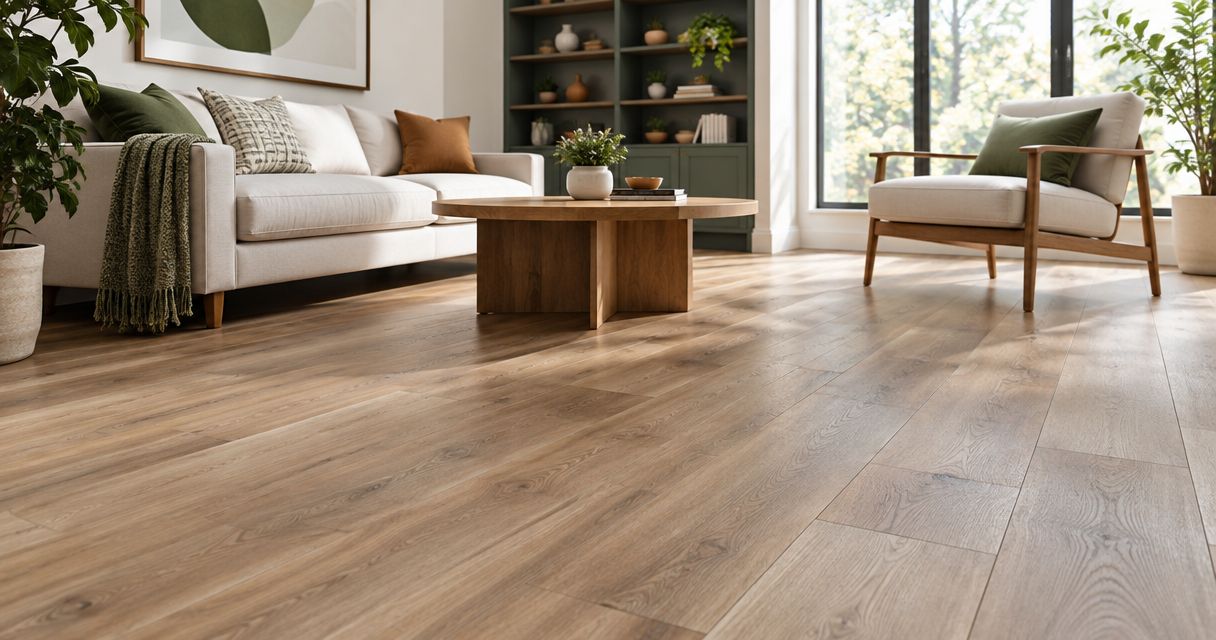
Best overall for underfoot comfort: COREtec’s WPC options. Best for patterned layouts: Karndean Designflooring. Best for single-retailer shopping: Lifeproof. This 2026 guide compares the best vinyl plank flooring brands for whole-home projects, including the installation details that matter before you choose.
- The best vinyl plank flooring brands depend on your rooms, subfloor, installation method, and staircase plan.
- COREtec’s WPC options are the default shortlist for homeowners prioritizing underfoot comfort.
- Karndean Designflooring suits patterned layouts; Mannington ADURA Flex suits homeowners considering glue-down installation.
- Accent Home Improvements helps Peoria homeowners choose materials and plan a complete vinyl plank flooring installation.
Why this matters for your Arizona home
A good-looking sample does not tell you whether the finished floor will fit your doors, meet the tile cleanly, or work on your stairs. Those decisions belong in the estimate, not on installation day.
For homeowners in Surprise, Sun City, Peoria, Glendale, and Phoenix, the useful comparison is the complete project: material, preparation, installation, and finishing. Accent Home Improvements installs vinyl, hardwood, and laminate flooring, with the owner personally helping choose materials and plan the full job.
Accent Home Improvements is best for Peoria homeowners who want owner-led planning for a whole-home vinyl plank flooring installation. Careful workmanship and a tidy jobsite are client-confirmed priorities, not substitutes for a clearly written scope.
What makes the best vinyl plank flooring brands?
Use these criteria before choosing from the 5 brands below. A brand name earns a place on your shortlist; the exact product earns a place in your house.
- Construction that fits your priorities: Compare wood-plastic composite, stone-plastic composite, and glue-down products separately. Different constructions solve different problems.
- Installation method: Floating and glue-down floors require different preparation and installation decisions. Neither makes an uneven base irrelevant.
- Room suitability: Read the exact product’s instructions for moisture, direct sunlight, temperature, and room restrictions.
- Whole-home finish details: Check transitions, edges, door clearances, and stair components before committing to a color.
- Usable product documentation: Look for clear installation instructions, maintenance requirements, and warranty exclusions for the selected line.
- Samples in your rooms: Compare the actual surface, bevels, pattern repetition, and color under your home’s lighting.
For a 2026 project, compare current documentation for the exact collection. A familiar brand name does not mean every product under it has the same construction or installation rules.
Best vinyl plank flooring brands at a glance
This shortlist assigns each brand a different job. It is a buying guide, not a claim that every collection from one manufacturer outperforms every collection from another.
| Brand or product family | Best for | Standout feature | Key limitation |
|---|---|---|---|
| COREtec WPC options | Underfoot comfort | WPC construction and cork backing on applicable products | Comfort-focused construction does not remove indentation or preparation concerns |
| Karndean Designflooring | Patterned layouts | Gluedown, loose lay, and rigid core formats | Installation method and layout must be selected together |
| Mannington ADURA Flex | Glue-down whole-home planning | Flexible luxury vinyl designed for glue-down installation | Subfloor preparation is especially important to the finished appearance |
| Shaw luxury vinyl | Comparing floating-floor collections | Multiple luxury vinyl collections with floating installation options | Brand-level comparisons are too broad to settle a purchase |
| Lifeproof | Single-retailer shopping | A vinyl flooring brand sold through The Home Depot | The retailer’s product listing does not define your installation scope |
1. COREtec: best vinyl plank flooring for underfoot comfort
COREtec belongs on your shortlist when you want to compare comfort-focused rigid flooring rather than choose solely by surface appearance. Applicable COREtec WPC products combine a wood-plastic composite core with cork backing; check the selected product rather than assuming that description covers the entire brand.
For a whole-home installation, start with the rooms where you spend time standing or walking. Then confirm that the chosen floor’s installation requirements fit the rest of the house.
COREtec pros:
- WPC options give you a specific construction to compare against denser rigid-core alternatives.
- Cork backing is an identifiable feature on applicable products, not a vague quality label.
- Different collections let you compare visual style and construction within one brand.
COREtec cons:
- Comfort is not the same as resistance to heavy furniture indentation.
- Added backing does not correct an uneven subfloor or authorize extra underlayment.
Best for: Homeowners who put underfoot feel high on the list for living rooms, bedrooms, and connected spaces.
Ask the installer to identify the exact COREtec collection in the estimate. Review its underlayment instructions and furniture protection guidance before purchase, especially where heavy furniture will remain.
Verdict: Buy COREtec WPC when comfort is your leading priority and the exact product fits the project.
2. Karndean Designflooring: best vinyl plank flooring for patterned layouts
Karndean Designflooring offers gluedown, loose lay, and rigid core flooring formats. That makes it a useful shortlist when the layout itself matters, whether you want a straightforward plank arrangement or a more deliberate pattern.
Choose the layout before treating installation as settled. Product format, room shape, and edge finishing affect how the design comes together; not every plank is intended for every pattern.
Karndean Designflooring pros:
- Multiple installation formats let you consider more than a standard floating-floor approach.
- Wood-look and stone-look designs support different room styles.
- Gluedown options provide a route for discussing detailed layouts with your installer.
Karndean Designflooring cons:
- Patterned layouts add planning, cutting, and alignment work to the job.
- A design you like does not automatically come in the installation format your project needs.
Best for: Homeowners who want the floor layout to be a deliberate part of the room design.
Bring your installer a room plan, not just an inspiration photo. Doorways, hallways, and adjoining rooms need a coherent layout so a decorative choice does not create awkward cuts elsewhere.
Verdict: Buy Karndean Designflooring when layout flexibility matters more than choosing the simplest plank arrangement.
3. Mannington ADURA Flex: best vinyl plank flooring for glue-down plans
Mannington ADURA Flex is a flexible luxury vinyl product family intended for glue-down installation. It belongs on the shortlist when you want your installer to assess an adhered floor rather than default to a floating system.
A glue-down floor still needs a properly prepared base. Surface defects can affect the finished appearance, so preparation belongs in the written scope before material selection becomes final.
Mannington ADURA Flex pros:
- Its glue-down format gives the installer a clear installation method to assess.
- Wood-look and tile-look options allow different visual approaches.
- The product family provides a defined alternative to rigid floating flooring.
Mannington ADURA Flex cons:
- Adhesive selection and subfloor preparation are central parts of the installation.
- Flexible flooring is not a shortcut around surface defects.
Best for: Homeowners considering a professionally installed glue-down floor across connected rooms.
Ask why glue-down fits your home and what preparation it requires. The answer should address the existing base, moisture evaluation, and finishing details—not simply describe the material as durable.
Verdict: Buy Mannington ADURA Flex when the installer recommends glue-down for your project and documents the preparation.
4. Shaw: best vinyl plank flooring for comparing floating options
Shaw offers multiple luxury vinyl flooring collections, including products intended for floating installation. Use that range to compare specific constructions, surface designs, and installation requirements within one manufacturer.
The useful comparison is between exact products, not between the Shaw name and another logo. Take the collection name and product identifier into the estimate discussion so the installer evaluates the floor you actually intend to buy.
Shaw pros:
- Multiple luxury vinyl collections give you different styles to review.
- Floating installation options suit a focused comparison of click-together flooring.
- Product-level documentation lets you check requirements before committing.
Shaw cons:
- Specifications vary across collections; a brand-wide recommendation is too broad.
- A floating floor still needs attention to flatness, perimeter clearance, and transitions.
Best for: Homeowners who want to compare floating-floor options with an installer before settling on a collection.
For your 2026 shortlist, put the selected Shaw product beside the other exact products under consideration. Compare instructions and finish components as carefully as the sample color.
Verdict: Hold the Shaw purchase until the exact collection and whole-home installation scope are matched.
5. Lifeproof: best vinyl plank flooring for single-retailer shopping
Lifeproof is a flooring brand sold through The Home Depot. It belongs on this list for homeowners who prefer to compare products through one retailer rather than build a shortlist across several dealer channels.
That simplifies the shopping route, not the installation. Your installer still needs to assess the exact product, existing flooring, subfloor condition, and room connections.
Lifeproof pros:
- A defined retail channel gives you a straightforward starting point for product research.
- Product listings provide identifiers to share with your installer.
- Different visual options let you compare samples against your room finishes.
Lifeproof cons:
- Retail descriptions do not replace the manufacturer’s installation instructions.
- Choosing the planks does not settle preparation, staircase work, or transitions.
Best for: Homeowners who want a single-retailer shortlist and a separately defined professional installation plan.
Before buying, ask the installer to review the selected product and list everything outside the plank purchase. This keeps shopping decisions separate from assumptions about what the installation includes.
Verdict: Buy Lifeproof when the retail route suits you and your installer has approved the exact product for the job.
How these brands are ranked
The order follows distinct homeowner needs: comfort, layout design, glue-down planning, floating-floor comparison, and single-retailer shopping. It does not assign unsupported durability scores or imply hands-on testing.
For 2026, the strongest recommendation is the product whose construction and installation requirements fit your home, not the brand with the loudest waterproof claim. Apply the same criteria to every collection before making the final choice.
Plan the whole job before choosing the planks
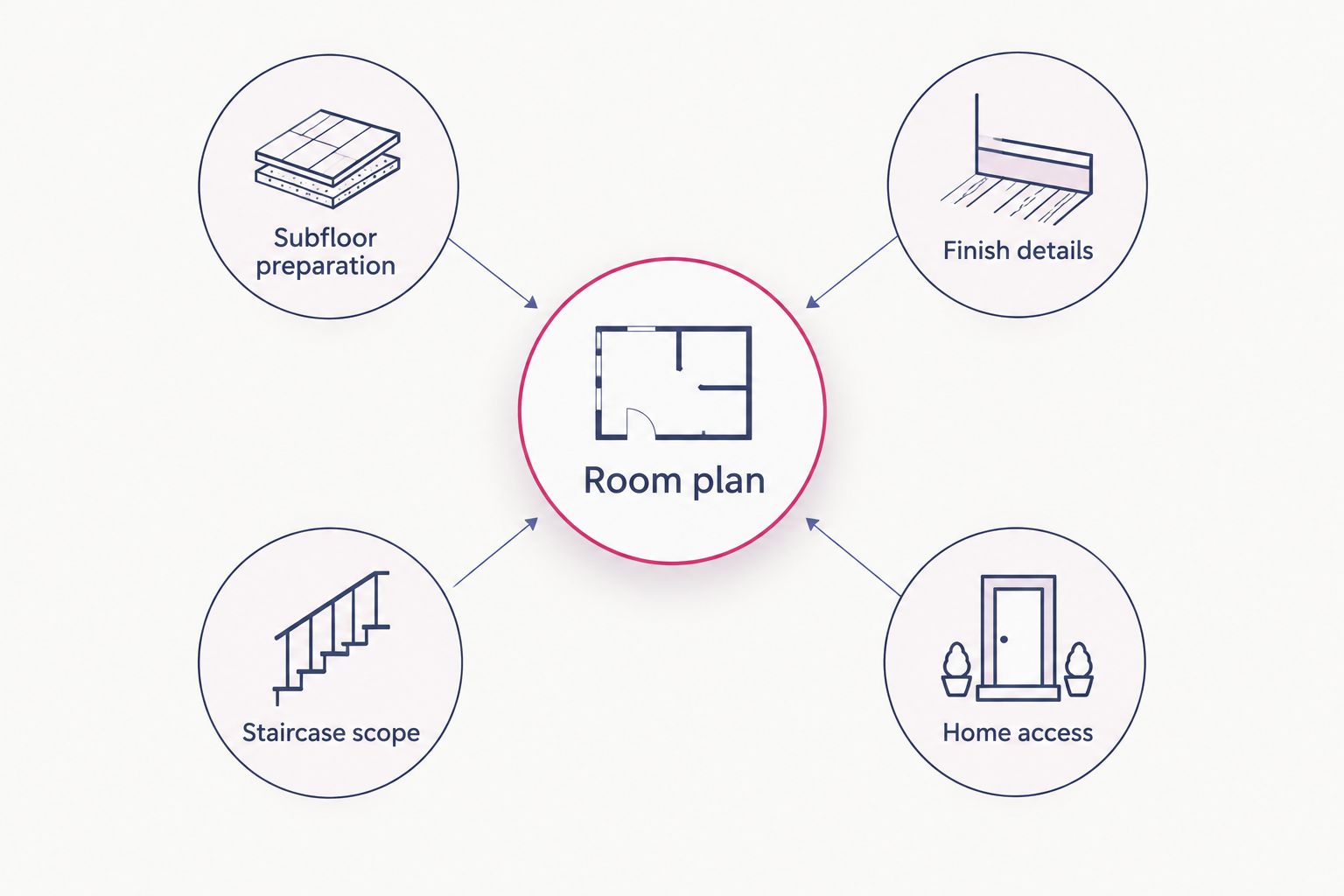
A whole-home estimate should connect the material choice to the work required in every room. Keep these 3 flooring types in the discussion: vinyl, hardwood, and laminate. You do not need to choose the same material everywhere, but mixed flooring requires deliberate transitions.
- Room plan: Identify included rooms, closets, hallways, and areas that will keep their existing floors.
- Subfloor preparation: Specify removal, surface preparation, and the moisture evaluation required by the selected product.
- Finish details: Address baseboards, door clearances, transitions, and exposed edges.
- Staircase scope: List treads, risers, nosings, and landings separately from the flat-floor area.
- Home access: Discuss furniture, room access, pets, and how the household will use the home during work.
These decisions connect. A change in flooring thickness can affect a doorway; a staircase choice can affect how the landing is finished.
Do not leave the staircase until later
A flooring sample is not a staircase specification. Ask which stair components work with the selected floor, how they attach, and how the installer will finish exposed edges.
Staircase flooring installation deserves its own scope, even when the same look continues upstairs. A floating-floor method used in a bedroom does not automatically apply to a stair tread.
Compare hardwood and laminate before committing
Choose hardwood when a real wood surface is central to your decision, then discuss the selected construction and maintenance needs. Compare laminate when you prefer its appearance and feel, but check the exact product’s moisture and installation restrictions.
Vinyl plank remains a separate choice, not a universal replacement for either material. Ask to see samples together so the decision reflects how you want the rooms to look and feel.
Scheduling starts with scope
Removal, preparation, stair work, furniture handling, and room access all affect scheduling. Confirm how those tasks are sequenced before accepting a project plan.
Accent Home Improvements personally helps homeowners choose materials and plan the full installation. For a 2026 estimate, describe the whole project—including stairs and retained flooring—rather than requesting a number for planks alone.
Plan your whole-home flooring project
Discuss materials, room connections, preparation, and staircase details before choosing your floor.
Which vinyl plank flooring brand should you choose?
Start with COREtec WPC if comfort is your main priority. Choose Karndean Designflooring for layout-led projects, Mannington ADURA Flex for a documented glue-down plan, Shaw for collection-level floating-floor comparisons, or Lifeproof for a single-retailer shopping route.
Then let the home narrow the choice. The selected floor must fit the subfloor, connected rooms, stairs, and manufacturer’s instructions; brand preference comes after those checks.
FAQ
What are the best vinyl plank flooring brands in 2026?
COREtec, Karndean Designflooring, Mannington, Shaw, and Lifeproof belong on a whole-home shortlist for different reasons. Compare the exact product’s construction, installation method, and finish components before choosing.
Is COREtec better than Lifeproof?
COREtec WPC is the stronger shortlist for homeowners prioritizing underfoot comfort, while Lifeproof suits single-retailer shopping through The Home Depot. Neither brand name settles whether a particular product fits your home.
What vinyl plank flooring is best for an Arizona home?
The best choice is a product whose installation instructions match your rooms, sunlight exposure, subfloor, and indoor conditions. Ask your installer to check those requirements rather than relying on a general desert-proof claim.
Should I choose glue-down or floating vinyl plank?
Choose the installation method after your installer assesses the home and the selected product. Glue-down and floating floors have different preparation and installation requirements, and both need a suitable base.
Can vinyl plank flooring go on stairs?
Vinyl flooring can be used on stairs when the selected products and stair components support that application. Specify treads, risers, nosings, and landings separately, and follow the applicable installation instructions.
What affects a whole-home vinyl plank installation estimate?
The estimate depends on the material, included areas, removal, preparation, transitions, staircase work, and furniture handling. Request a written scope so you can compare the same work across estimates.
Does Accent Home Improvements help choose flooring materials?
Yes. Accent Home Improvements’ owner personally helps homeowners choose materials and plan the full job, with careful workmanship and a tidy jobsite as priorities.
One last thing
Approve the transition and stair details before approving the floor color. A sample shows the surface; it does not show the meeting point with tile, the edge at a landing, or the clearance beneath a door.
Ask for those details in the estimate. They are part of the finished result, not extras to figure out after the planks arrive.