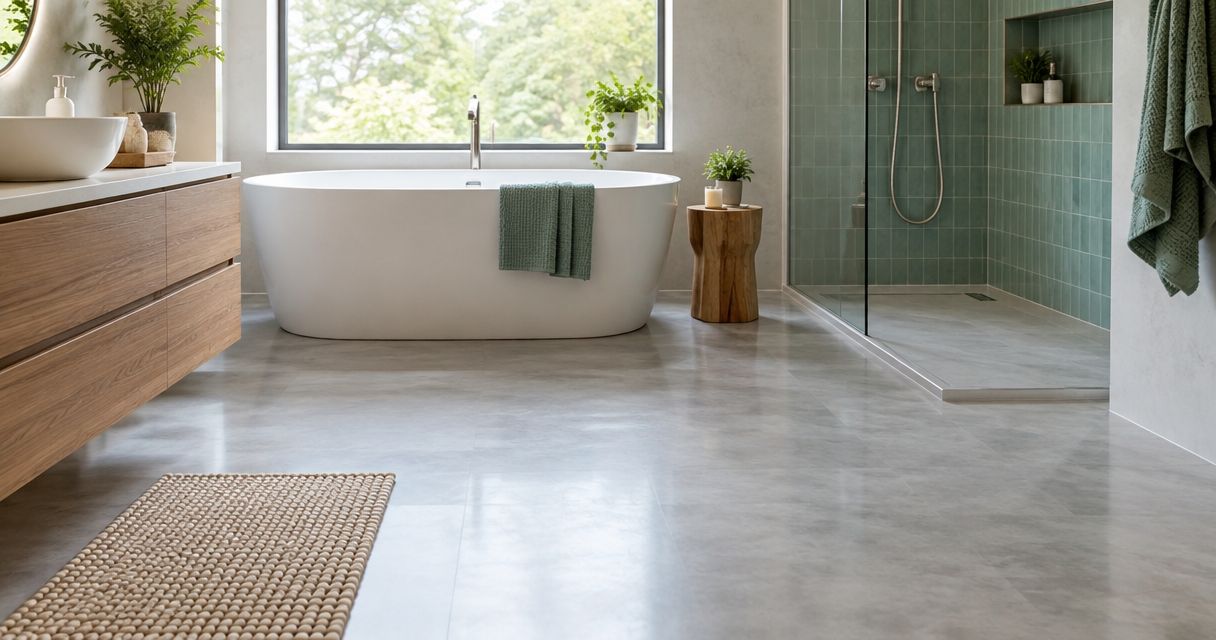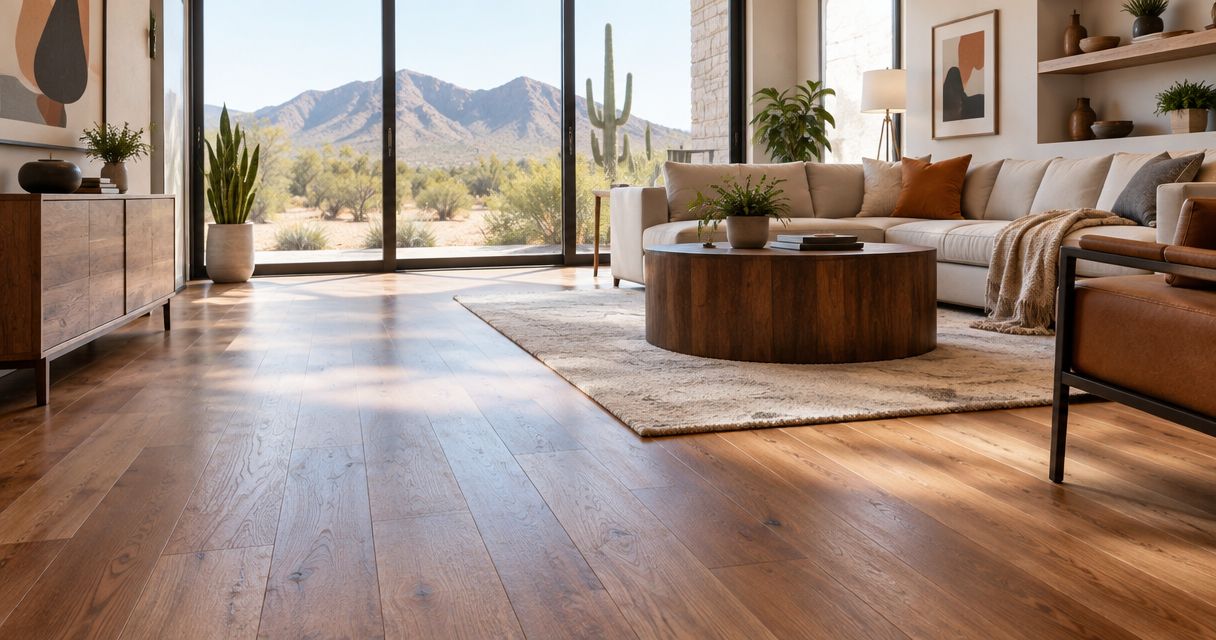
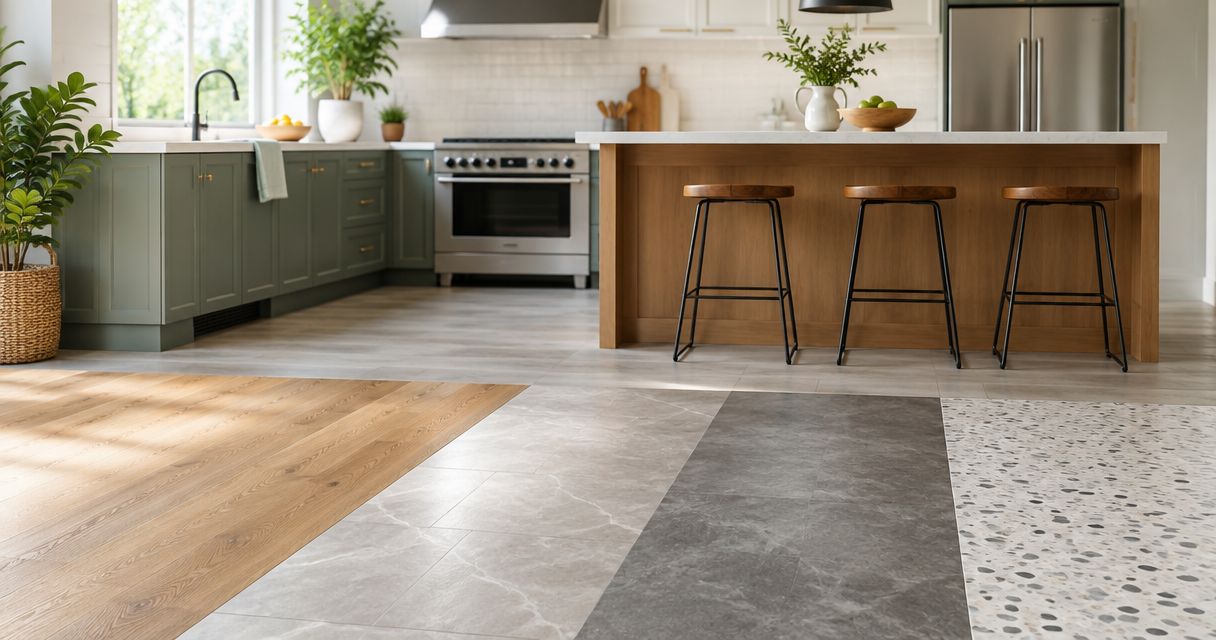
Best overall: vinyl plank. Best for water exposure and hard-wearing surfaces: porcelain tile. Best for continuity with wood-floored living areas: engineered hardwood. Best for a wood look without choosing real wood: laminate. The best flooring for kitchens in 2026 depends on spills, cleaning, and how the kitchen connects to the rest of your home.
- Vinyl plank is the best flooring for kitchens when everyday spills and easy cleaning lead your priorities.
- Porcelain tile suits homeowners who accept a harder surface and grout maintenance.
- Engineered hardwood suits connected living spaces; laminate requires close attention to product-specific water protection.
- Accent Home Improvements helps homeowners choose flooring materials and plan the full installation project.
Why this matters
A kitchen floor has to handle cooking spills, chairs, appliance access, and traffic from adjoining rooms. Choosing a surface by appearance alone leaves the important decisions until installation.
For homeowners planning flooring in Surprise, Sun City, Peoria, Glendale, or Phoenix, the kitchen belongs in the whole-home plan. Decide how it connects to hallways, bedrooms, and stairs before ordering materials. Accent Home Improvements is best for homeowners who want owner-led planning for a hardwood, laminate, or vinyl flooring installation.
Choose the floor and the installation scope together. A suitable material does not solve an uneven base, an awkward doorway transition, or a dishwasher trapped behind a raised floor.
What makes the best flooring for kitchens?
Use these criteria to compare kitchen flooring in 2026. The strongest choice fits your household and the complete job, not just the sample you like.
- Spill tolerance: Distinguish the flooring material's water resistance from protection for seams, edges, and the floor underneath. Read the exact product instructions.
- Cleaning requirements: Check permitted cleaners and cleaning methods. Easy daily care matters more than a finish that looks good only when freshly cleaned.
- Surface durability: Consider grit, chair movement, pets, and dropped cookware. Scratch resistance, dent resistance, and water resistance are separate properties.
- Walking comfort: Compare firmness underfoot, particularly where you stand to prepare meals. Tile feels harder than many resilient flooring options.
- Whole-home continuity: Check doorway heights, connected rooms, and staircase flooring. One material throughout is not automatically the right answer for every space.
- Installation fit: Include the existing floor, subfloor condition, appliance clearance, and manufacturer requirements. These determine whether your preferred material fits the project.
Kitchen flooring options at a glance
The ranking below separates each material by its strongest use case. It does not treat every vinyl, tile, hardwood, or laminate product as interchangeable.
| Rank and material | Best for | Standout feature | Key limitation |
|---|---|---|---|
| 1. Vinyl plank | Everyday spills and practical cleaning | Water-resistant material with a wood-look appearance | Product construction and installation details affect performance |
| 2. Porcelain tile | Water exposure and a hard-wearing surface | Low water absorption in the tile itself | Hard underfoot; grout and installation still need attention |
| 3. Engineered hardwood | Continuity with real-wood living areas | Real wood surface over layered construction | Prolonged moisture can damage wood |
| 4. Laminate | A wood look without real wood | Decorative surface with product-dependent wear resistance | Water protection varies; damaged cores are not sanded back |
1. Vinyl plank: best kitchen flooring for everyday spills
Vinyl plank is the default recommendation for a kitchen where practical cleaning and ordinary spills matter most. It offers a wood-look surface without a real-wood wear layer. Compare the specific product's construction, installation method, and care instructions before choosing it.
The important distinction is between a water-resistant plank and a watertight room. A plumbing leak can reach edges, joints, or the subfloor even when the plank material tolerates water. Clean spills promptly and address leaks rather than relying on a flooring label.
Vinyl plank pros:
- Suits kitchens where food preparation creates frequent small spills.
- Offers wood-look choices for connected kitchens and living rooms.
- Avoids the grout joints found in a typical tile installation.
- Provides a less rigid surface underfoot than porcelain tile.
Vinyl plank cons:
- Heavy objects, sharp impacts, and furniture movement can damage the surface.
- An uneven base can affect the finished result; vinyl does not replace floor preparation.
- Refinishing is not an option in the way it is for suitable wood floors.
Best for: Homeowners who want practical kitchen flooring as part of a vinyl plank whole-home installation.
For your 2026 project, inspect the sample in kitchen light and beside adjoining finishes. Ask the installer to explain the required base preparation and how the flooring will meet appliances and doorways. A plank that looks convincing in isolation can look different across an open living area.
Verdict: Buy vinyl plank when everyday spill tolerance and straightforward care are your main priorities.
2. Porcelain tile: best kitchen flooring for water exposure
Porcelain tile suits homeowners who prioritize a hard surface and low water absorption in the tile itself. It works as a distinct kitchen finish or as part of a larger tiled area. Its appearance ranges from plain surfaces to stone-look and wood-look designs.
Tile still needs a suitable installation assembly. Grout, movement joints, the supporting floor, and any required waterproofing are separate decisions. A porcelain surface alone does not turn the kitchen into a waterproof enclosure.
Porcelain tile pros:
- The tile itself has low water absorption.
- Handles ordinary kitchen spills without the moisture sensitivity of wood.
- Offers a hard surface suited to busy cooking areas.
- Can create a deliberate visual separation from adjoining wood-look floors.
Porcelain tile cons:
- Feels hard underfoot during long periods of standing.
- Grout introduces additional cleaning and maintenance considerations.
- Tile can crack or chip, and repairs require attention to matching materials.
Best for: Homeowners who put water tolerance and surface hardness ahead of a softer walking feel.
Before selecting tile, discuss floor height and the transition to neighboring rooms. Consider the route from the kitchen into hallways and toward the stairs, not just the kitchen footprint. A visually attractive tile choice can still create an inconvenient change in level.
Porcelain belongs in this comparison, but Accent Home Improvements' stated flooring services are hardwood, laminate, and vinyl installation. Do not assume the same installation scope applies to tile.
Verdict: Buy porcelain tile when you accept its harder feel and the upkeep of grout joints.
3. Engineered hardwood: best kitchen flooring for real-wood continuity
Engineered hardwood has a real wood surface over layered construction. It suits a kitchen that opens directly into living spaces where you want the same wood character. The layered construction does not make the wood surface waterproof.
This choice asks more of your household's spill habits. Wipe up water promptly, monitor appliance leaks, and follow the selected floor's cleaning instructions. Confirm that the manufacturer permits the intended kitchen application before committing.
Engineered hardwood pros:
- Provides a real wood surface rather than a printed wood pattern.
- Supports visual continuity between the kitchen and adjoining living areas.
- Offers different wood species, finishes, and plank appearances.
- Some products permit refinishing, depending on the wear layer and manufacturer guidance.
Engineered hardwood cons:
- Standing water and prolonged moisture can damage the floor.
- Scratches and dents remain possible in a busy kitchen.
- Refinishing options vary; do not assume every engineered floor can be sanded.
Best for: Homeowners who prioritize real wood across connected rooms and will follow the floor's care requirements.
For a 2026 whole-home project, discuss sunlight, indoor conditions, and the chosen product's installation requirements with your contractor. Compare the kitchen sample against existing wood rather than assuming similar color names mean a close match. Also decide whether staircase flooring should match or use a coordinated finish.
Verdict: Hold engineered hardwood until kitchen suitability, spill expectations, and the connected-room plan are confirmed. Once those conditions fit, it is the strongest option here for real-wood continuity.
4. Laminate: best kitchen flooring for a wood look without real wood
Laminate uses a decorative surface over a core rather than a real-wood top layer. It suits homeowners who like a wood appearance and want to compare alternatives to hardwood. Kitchen suitability depends on the exact product, particularly its moisture requirements.
Do not treat all laminate as equally water-resistant. Compare the manufacturer's instructions for joints, perimeter details, cleaning, and permitted applications. Product claims need to match the way your kitchen is used.
Laminate pros:
- Offers wood-look patterns without a real-wood surface.
- Provides a wear surface whose scratch resistance can be compared across products.
- Can coordinate a kitchen with other laminate-floored rooms.
- Gives homeowners another material to evaluate alongside vinyl and hardwood.
Laminate cons:
- Moisture reaching a susceptible core can cause swelling and joint damage.
- A damaged decorative surface cannot be restored by sanding it like wood.
- Water-resistance claims differ between products and do not remove the need to clean spills.
Best for: Homeowners who want laminate across connected rooms and can select a product explicitly suited to kitchen use.
Ask your installer how the chosen laminate handles the sink area, dishwasher opening, and transitions. Look at a larger arrangement of samples when possible; the pattern matters more across a whole room than on a single board. Confirm staircase details separately rather than assuming the room flooring answers every stair requirement.
Verdict: Buy laminate only after confirming the selected product's kitchen application and water-care requirements. Skip it when those requirements do not fit your household.
Plan the whole kitchen project, not just the surface
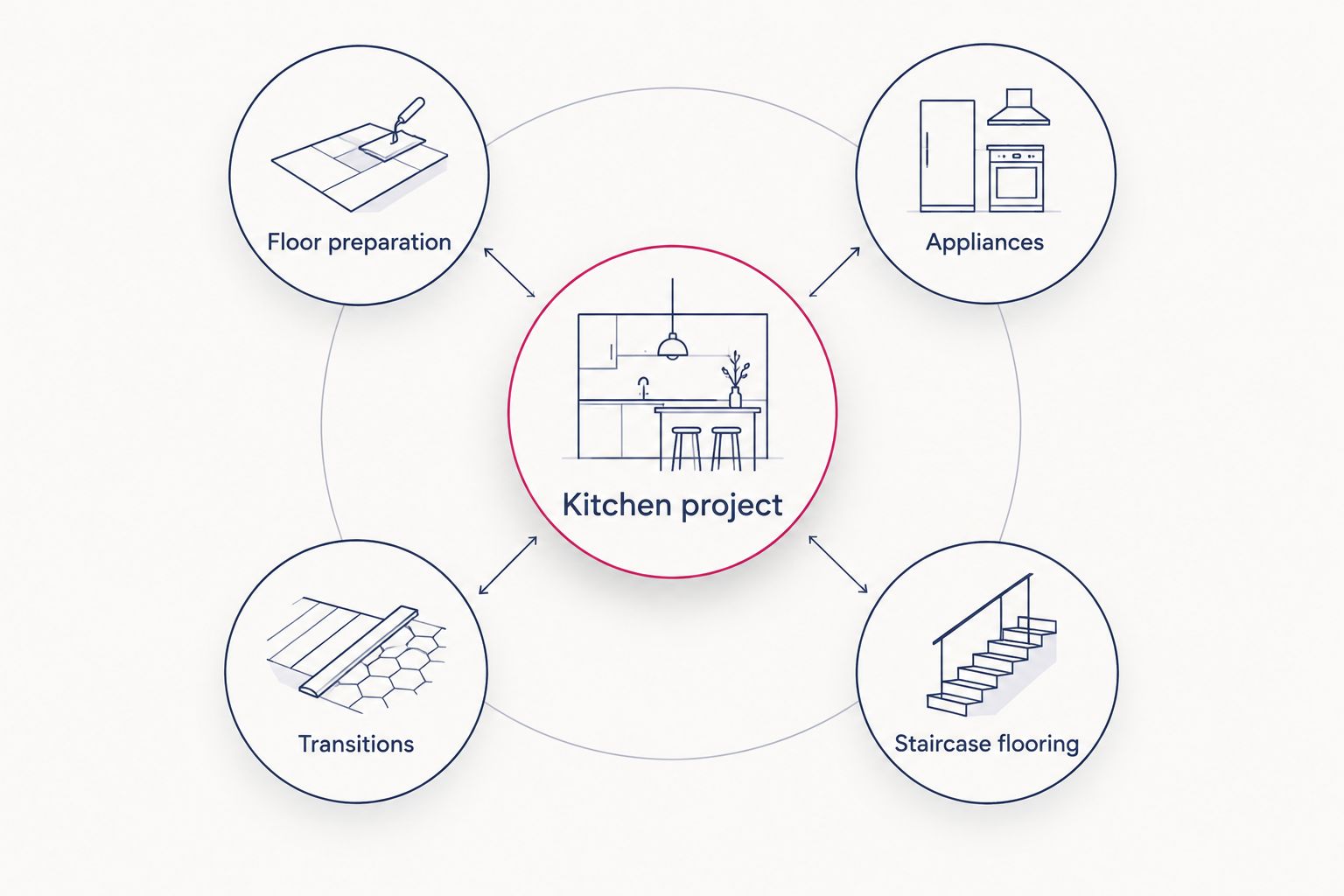
A useful flooring estimate describes what happens around the flooring as clearly as what goes underneath it. For a 2026 installation, settle these scope questions before agreeing to the job.
- Floor preparation: Identify the existing flooring, removal needs, and the condition of the supporting surface. Ask how preparation will be handled if problems become visible after removal.
- Appliances: Decide who moves appliances and handles any required disconnection or reconnection. Check dishwasher removal clearance against the proposed finished floor height.
- Transitions: Define how the kitchen meets adjacent rooms, exterior doors, and fixed features. Confirm which trim and transition details belong in the scope.
- Staircase flooring: Include stairs and landings in the material discussion when they are part of the whole-home project. Stair edges and attachment details need their own plan.
These decisions connect the kitchen to the full installation. They also help you compare estimates for the same work instead of comparing a complete project with a flooring-only proposal.
Ask how the work sequence affects access to the kitchen and adjoining rooms. Material delivery, preparation, and appliance arrangements belong in the scheduling conversation; do not infer a completion date from the material choice alone.
Accent Home Improvements' owner handles the project personally, helps choose materials and plan the full job, and prioritizes careful workmanship and a tidy jobsite. For a kitchen connected to a whole-home hardwood, laminate, or vinyl installation, request an estimate that covers those connections explicitly.
Plan your whole-home flooring installation
Discuss kitchen materials, connected rooms, and staircase flooring before requesting your installation estimate.
How we ranked the kitchen flooring options
This 2026 ranking puts everyday spill tolerance and cleaning first, then separates the materials by walking comfort, real-wood appearance, and installation fit. It is a material-selection guide, not a claim that every product within a category performs equally.
Vinyl plank takes the default position because it combines practical spill tolerance with wood-look continuity. Porcelain tile wins the hard-surface slot. Engineered hardwood and laminate require closer attention to the selected product's moisture limits.
Which kitchen flooring should you choose?
Choose vinyl plank if you are undecided and want a practical kitchen floor that connects to everyday living spaces. Choose porcelain when surface hardness matters more than underfoot comfort, engineered hardwood when real-wood continuity leads, and laminate when its specific kitchen requirements fit your home.
For installation planning, Accent Home Improvements kitchen flooring discussions should include the adjoining hardwood, laminate, or vinyl areas and any staircase flooring in the job. Request one clearly defined project scope rather than making each room decision separately.
FAQ
What's the best flooring for kitchens in 2026?
Vinyl plank is the best default kitchen flooring choice when everyday spills and practical cleaning are your main concerns. Porcelain tile suits a harder surface, while engineered hardwood suits real-wood continuity. Confirm the exact product's kitchen requirements before ordering.
Is vinyl plank better than laminate for a kitchen?
Vinyl plank is the stronger default when spill tolerance is the deciding factor. Laminate remains an option when the selected product is intended for kitchen use and its water-care requirements fit your household.
Can I put engineered hardwood in my kitchen?
Engineered hardwood can suit a kitchen when the manufacturer permits that application and you follow its moisture and care requirements. Its real-wood surface can be damaged by prolonged water exposure, so it is not the default choice for households that leave spills standing.
Is porcelain kitchen flooring completely waterproof?
Porcelain tile's low water absorption does not make the entire kitchen floor waterproof. Grout, joints, the supporting floor, and any required waterproofing are separate parts of the installation.
What affects a kitchen flooring installation estimate?
The material, existing-floor removal, floor preparation, appliance handling, and transition details affect the installation scope. Connected rooms and staircase flooring also belong in the estimate when you are planning a whole-home project.
Should my kitchen floor match the rest of my house?
Matching is useful for visual continuity, but it is not required. Compare kitchen spill needs with the adjoining rooms, and plan the transition deliberately if you choose different materials.
Who can help plan a whole-home flooring installation in Peoria?
Accent Home Improvements is a Peoria, Arizona flooring contractor offering residential hardwood, laminate, and vinyl flooring sales and installation. The owner handles the project personally and helps homeowners choose materials and plan the full job, including staircase flooring discussions when stairs are part of the scope.
One last thing
Check dishwasher removal clearance before approving the finished floor height. A floor that looks right can still complicate future appliance service if that clearance is overlooked. Put the check in your installation discussion, not on your after-installation list.