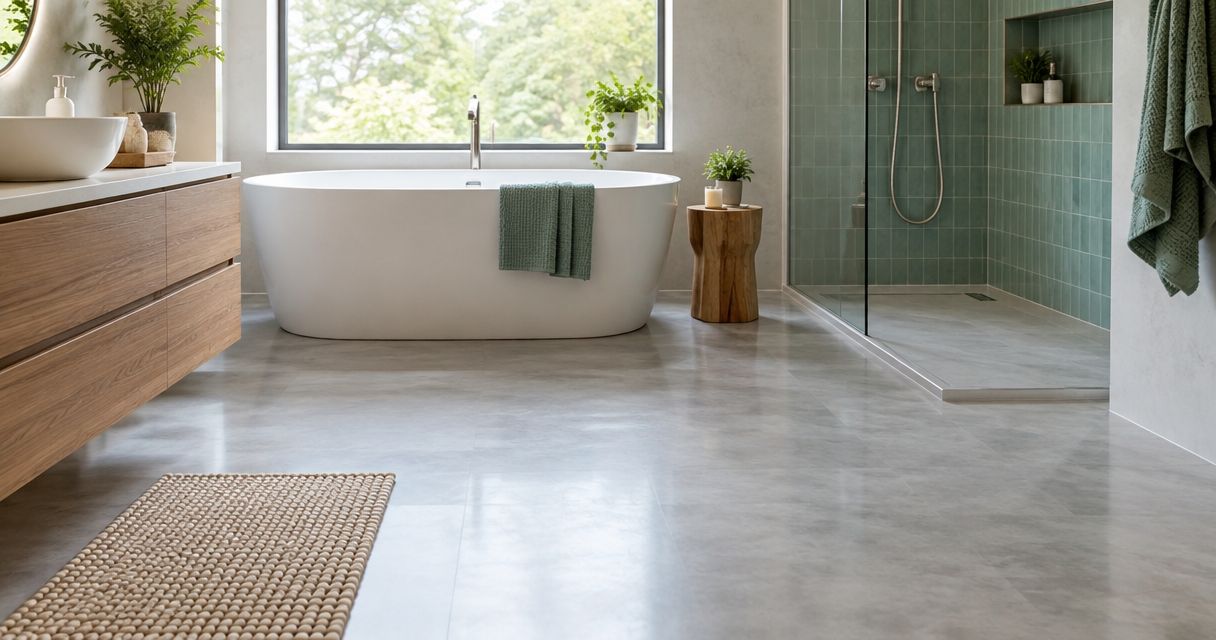
Best overall: porcelain tile. Best for whole-home continuity: waterproof-rated vinyl plank. Best for fewer floor seams: sheet vinyl. Best for a separate bathroom refresh: ceramic tile. The best waterproof flooring for bathrooms in 2026 depends on water exposure, installation details, and whether you are replacing one room or the floors throughout your home.
- Porcelain tile is the best waterproof flooring for bathrooms when water resistance matters more than matching adjacent rooms.
- Waterproof-rated vinyl plank suits whole-home flooring projects, but seams and perimeter details still need proper installation.
- Sheet vinyl reduces floor seams; ceramic tile offers a separate bathroom finish without imitating wood.
- Accent Home Improvements suits homeowners planning bathroom vinyl flooring alongside a whole-home installation.
Why this matters
A waterproof flooring material does not automatically create a waterproof bathroom. Water can reach the subfloor through edges, plumbing openings, damaged seams, or an installation that ignores the manufacturer's requirements. Choose the floor and the installation scope together.
For homeowners in Surprise, Sun City, Peoria, Glendale, and Phoenix, the bathroom decision also affects the rest of a whole-home project. You need to consider adjoining bedrooms, hallway transitions, existing floor heights, and staircase flooring before selecting a finish.
Accent Home Improvements installs hardwood, laminate, and vinyl flooring for local homeowners. The owner handles the project personally, helps choose materials and plan the full job, and prioritizes careful workmanship and a tidy jobsite.
What makes the best waterproof bathroom flooring?
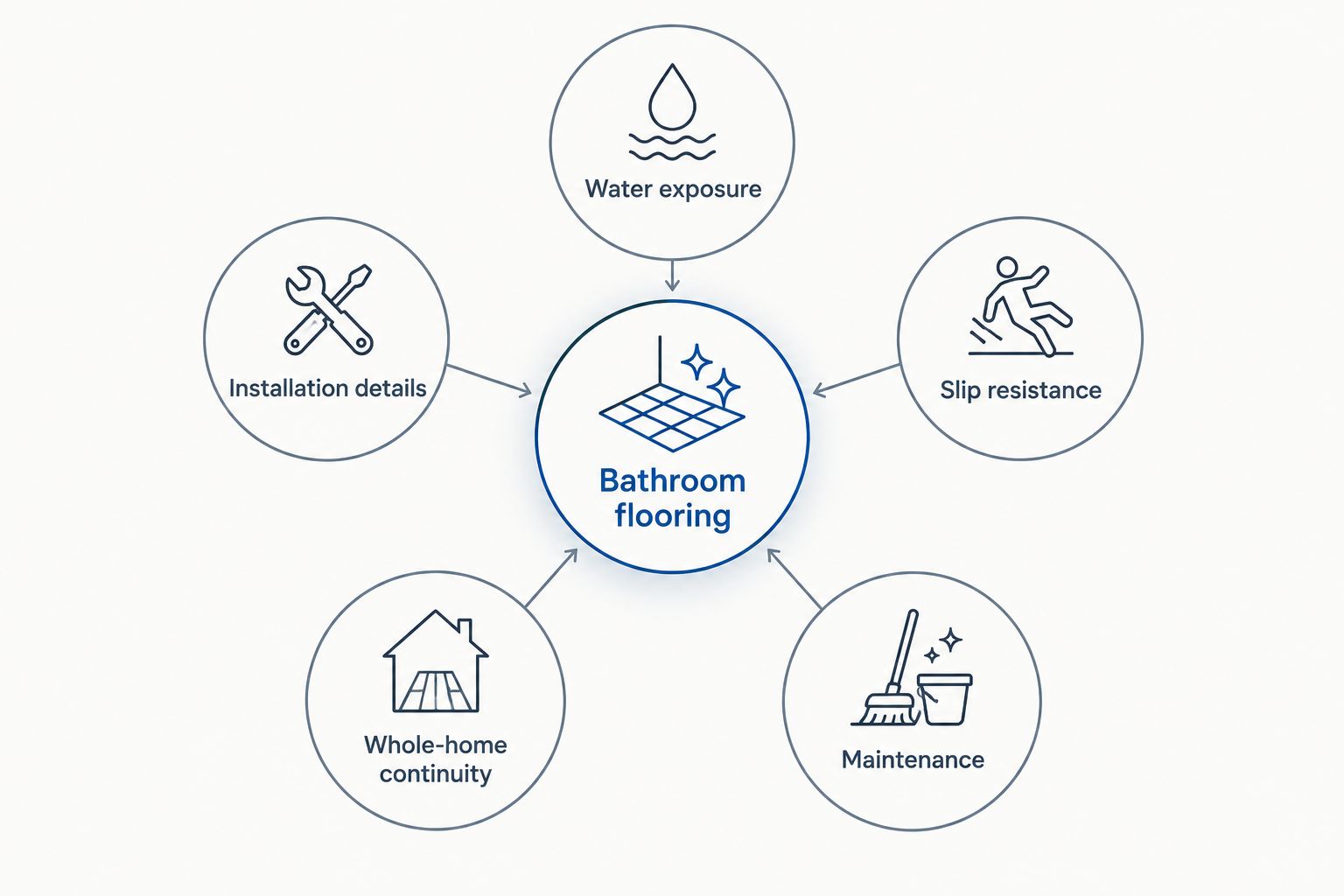
Use these criteria to compare bathroom flooring in 2026. A finish that looks good in a sample still needs to suit the room beneath it.
- Water exposure: Separate everyday splashes from standing water, plumbing leaks, and direct shower exposure. A bathroom floor is not automatically a shower-floor product.
- Installation details: Check seams, wall edges, toilet openings, transitions, and the required substrate preparation. Those details affect where water can travel.
- Slip resistance: Compare the actual product's suitability for wet, barefoot use. A material name alone does not establish traction.
- Whole-home continuity: Decide whether the bathroom should match the hallway or have a separate finish. Include staircase connections in the plan.
- Maintenance: Compare cleaning instructions, grout care, scratch sensitivity, and the practical work involved in repairing damage.
Ask the installer to explain these criteria using the products you are considering, not just broad labels such as waterproof or luxury.
Waterproof bathroom flooring at a glance
These 2026 recommendations rank material categories by their best use, not specific product brands. Confirm bathroom suitability for the exact flooring before approving an installation.
| Flooring option | Best for | Standout feature | Key limitation |
|---|---|---|---|
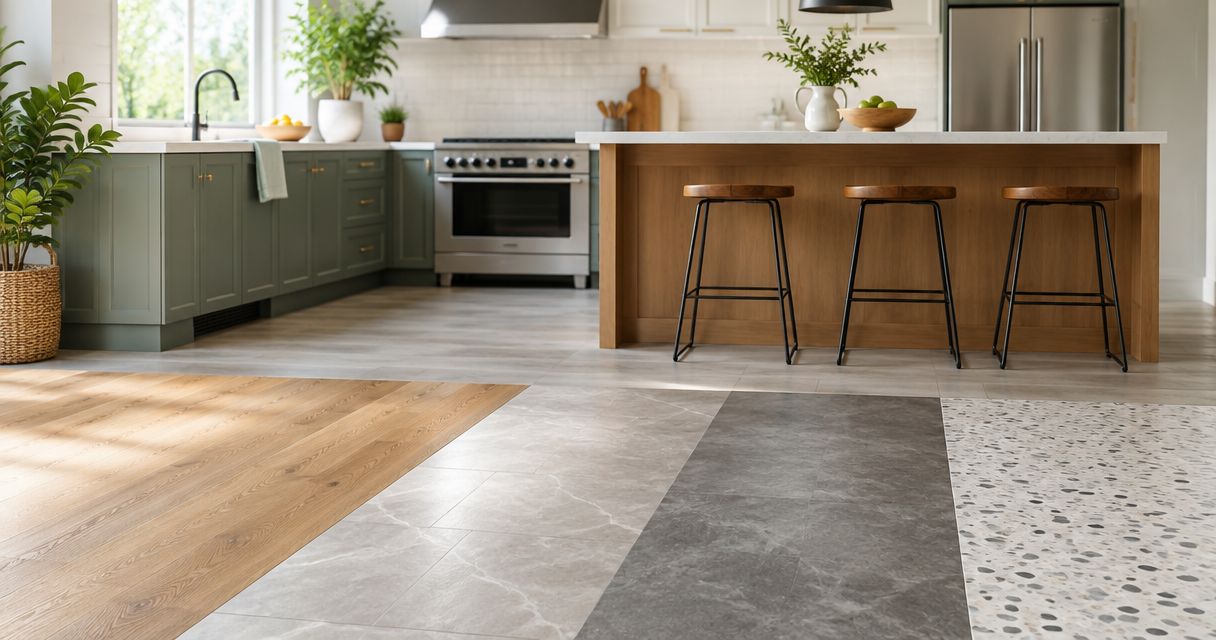
| Porcelain tile | Water resistance as the main priority | Very low water absorption | Tile and grout do not replace a properly designed floor assembly |
| Waterproof-rated vinyl plank | Matching a whole-home vinyl installation | Wood-look continuity between rooms | Joints and perimeter details still require attention |
| Sheet vinyl | Reducing seams across the bathroom | Broad sheets can limit floor joints | Cuts, edges, and any required seams need careful detailing |
| Ceramic floor tile | A separate bathroom refresh | Wide choice of tile finishes | Suitability and water absorption vary by product |
1. Porcelain tile: best bathroom flooring for water resistance
Porcelain tile wins when your main concern is a water-resistant floor surface rather than a continuous wood look. Under the ANSI A137.1 classification, porcelain tile has water absorption of 0.5% or less. That describes the tile itself, not the waterproofing of the finished bathroom.
Porcelain still needs a suitable substrate and correct installation. Where waterproofing is required, ask how the assembly addresses it rather than assuming grout will keep water away from the subfloor.
Porcelain tile pros:
- Very low water absorption in the tile body.
- A distinct bathroom finish without relying on wood-based flooring.
- Multiple surface textures and layouts to compare.
- A practical choice when you want to separate the bathroom from adjacent flooring.
Porcelain tile cons:
- A hard surface underfoot that can feel cool.
- Grout joints add cleaning considerations.
- Substrate preparation and floor-height transitions need planning.
Best for: Homeowners who put bathroom water resistance ahead of matching every room.
Before selecting porcelain, compare the actual surface texture under bathroom conditions. A glossy appearance is not evidence of wet-floor traction. Also ask who will handle any waterproofing and how the finished tile height meets the hallway floor.
Verdict: Buy porcelain tile when water resistance is the priority and a separate tile installation fits your project.
2. Waterproof-rated vinyl plank: best for whole-home continuity
Waterproof-rated vinyl plank is the strongest fit when you want a bathroom to visually connect with a whole-home vinyl installation. You can plan the bathroom, hallway, bedrooms, and shared spaces around a coordinated material choice. The exact product must explicitly permit the intended bathroom use.
A waterproof plank does not promise a waterproof room. Check the manufacturer's requirements for perimeter treatment, expansion space, plumbing openings, and transitions; do not assume a continuous-looking floor should run uninterrupted through every doorway.
Waterproof-rated vinyl plank pros:
- Wood-look flooring without using hardwood in the bathroom.
- A coordinated appearance across a whole-home vinyl project.
- No tile grout joints to maintain.
- Material selection can account for adjoining rooms and stair finishes together.
Waterproof-rated vinyl plank cons:
- Water can reach beneath the floor through openings or inadequately detailed edges.
- Scratches and surface damage remain possible.
- Bathroom suitability and installation requirements differ between products.
Best for: Homeowners hiring an installer for bathroom vinyl flooring as part of a larger flooring project.
Accent Home Improvements is best for homeowners planning bathroom vinyl flooring alongside a whole-home installation. The owner personally helps choose materials and plan the full job. Compare actual samples and written installation requirements before treating any vinyl plank as suitable for your bathroom in 2026.
Verdict: Buy waterproof-rated vinyl plank when the exact product permits bathroom use and whole-home continuity matters.
3. Sheet vinyl: best bathroom flooring for fewer seams
Sheet vinyl is worth considering when reducing floor joints is your main goal. Depending on the room dimensions and sheet layout, a bathroom floor can have fewer seams than a plank floor. That does not eliminate openings around fixtures or edges at the walls.
Ask the installer to explain where any seams will sit and how those seams will be treated. The layout matters as much as the pattern, especially around the toilet, vanity, doorway, and other interruptions.
Sheet vinyl pros:
- Broad sheets can reduce joints across the floor.
- A resilient surface rather than hard tile.
- No grout lines to clean.
- Patterns can provide a separate bathroom look without a plank layout.
Sheet vinyl cons:
- Cuts and tears can compromise the floor covering.
- Local repairs can remain visible.
- Subfloor unevenness can show through the finished surface.
Best for: Homeowners who prioritize fewer seams over matching a whole-home plank layout.
Do not select sheet vinyl from a pattern alone. Confirm the material's bathroom suitability, the required installation method, and the condition of the existing substrate. Ask whether the room layout requires a seam before making fewer seams the deciding benefit.
Verdict: Buy sheet vinyl when seam reduction matters and the proposed layout supports that goal.
4. Ceramic floor tile: best for a separate bathroom refresh
Ceramic floor tile suits homeowners who want the bathroom to have its own finish while keeping the adjacent flooring unchanged. Choose a product designated for floors and appropriate for the intended wet conditions. Decorative wall tile is not a substitute for suitable floor tile.
Ceramic tile is a broad category, so do not assume every product absorbs water like porcelain. Compare the actual tile specifications, surface texture, and maintenance requirements.
Ceramic floor tile pros:
- A wide choice of colors, patterns, and sizes.
- A distinct finish for a bathroom-only renovation.
- No wood-based plank core to evaluate.
- A layout that can remain separate from hallway or bedroom flooring.
Ceramic floor tile cons:
- Water absorption varies across products.
- Grout joints need routine cleaning.
- Hardness, floor height, and substrate preparation require consideration.
Best for: Homeowners refreshing a separate bathroom without matching the rest of the house.
For a 2026 bathroom project, ask for the floor-use designation and wet-use suitability of the selected tile. Then review the doorway transition and the installation assembly. Neither a bathroom display nor a familiar tile style confirms those details.
Verdict: Buy ceramic floor tile when the selected product suits the bathroom and a separate finish is intentional.
What about laminate and hardwood in bathrooms?
Laminate and hardwood belong in the whole-home discussion, but neither category is the default answer to bathroom water exposure. Hardwood responds to moisture. Laminate bathroom suitability depends on the exact product, its construction, and its installation requirements.
| Material | Best for | Advantage | Bathroom limitation |
|---|---|---|---|
| Laminate | Coordinating eligible rooms with a wood-look floor | Can suit a broader whole-home design | Water-related claims and bathroom approval vary by product |
| Hardwood | Dry living areas in a whole-home project | Real wood appearance | Moisture exposure makes it a poor default bathroom recommendation |
Laminate pros: A wood-look finish and potential continuity with adjacent rooms. Laminate cons: Bathroom use is product-specific, and exposed joints or edges can create moisture problems. Verdict: Wait until the exact laminate's bathroom approval and installation requirements are confirmed.
Hardwood pros: Real wood character and continuity through dry living spaces. Hardwood cons: Moisture can affect the boards, and a bathroom leak creates an avoidable material risk. Verdict: Skip hardwood as the default waterproof bathroom choice.
Accent Home Improvements can help plan hardwood, laminate, vinyl, and staircase flooring as parts of the same residential project. Matching the whole house does not require putting the same material in every room. A planned transition can be the better decision.
Plan the complete installation, not just the bathroom surface
Bring 2 material samples to the selection discussion: your preferred bathroom finish and the adjacent-room finish. Compare them together under your home's lighting. This makes differences in color, texture, and plank appearance easier to judge.
For your 2026 estimate, request 1 written scope covering removal, substrate preparation, flooring installation, transitions, trim, and responsibility for fixture-related work. Include stairs if the whole-home project reaches a staircase; matching the landing does not settle the stair installation details.
Use these 3 scope checks before approving the job:
- Room connections: Identify every doorway, landing, and change in floor height affected by the project.
- Water details: Confirm the selected material's bathroom instructions and responsibility for plumbing or moisture problems.
- Jobsite plan: Discuss furniture access, material staging, cleanup, and the order in which rooms will be worked on.
Preparation needs, removal work, room layout, fixture handling, and staircase details all affect the estimate and schedule. Resolve them before committing to an installation date. Avoid choosing a floor solely because the sample seems easy to install.
Plan your whole-home flooring project
Discuss bathroom vinyl, adjoining rooms, and staircase flooring with the owner.
How these bathroom flooring options rank
The ranking follows water resistance, installation details, slip resistance, whole-home continuity, and maintenance. Porcelain leads when water resistance is the deciding factor. Waterproof-rated vinyl plank leads when bathroom suitability and a coordinated whole-home vinyl installation need to work together.
Sheet vinyl earns its place for seam reduction; ceramic floor tile earns its place for a separate bathroom refresh. These are material-category recommendations, not claims that every product in a category performs identically.
Which waterproof bathroom flooring should you choose?
Choose porcelain tile if you are undecided and bathroom water resistance is your first priority. Choose waterproof-rated vinyl plank instead when you are hiring for a whole-home vinyl installation and the exact product permits bathroom use.
For a coordinated residential project, Accent Home Improvements offers owner-led material selection and full-job planning. Keep the bathroom decision connected to the hallways, bedrooms, and staircase rather than treating it as an isolated purchase.
FAQ
What's the best waterproof flooring for bathrooms in 2026?
Porcelain tile is the best overall choice when bathroom water resistance is the main priority. Waterproof-rated vinyl plank is the better fit for matching a whole-home vinyl project, provided the exact product permits bathroom use.
Is vinyl plank better than tile for a bathroom?
Vinyl plank is better for whole-home visual continuity; porcelain tile is better when very low tile water absorption is the priority. Compare the actual product's wet-use suitability and installation requirements before choosing.
Does waterproof flooring protect the subfloor from a leak?
Waterproof flooring does not automatically protect the subfloor from a leak. Water can pass through edges, openings, or damaged seams, so the floor assembly and plumbing condition still matter.
Can laminate flooring go in a bathroom?
Laminate can go in a bathroom only when the exact product permits that use and its installation requirements are followed. Do not treat a general water-resistance claim as bathroom approval.
Should I use the same flooring in the bathroom and hallway?
Use the same flooring only if the selected product suits both rooms and the installation requirements allow the planned layout. A deliberate transition lets you coordinate the finishes without forcing one material everywhere.
What affects a bathroom flooring estimate?
Removal, substrate preparation, room layout, transitions, trim, and fixture-related work affect the installation estimate. For a whole-home project, include adjoining rooms and staircase flooring in the written scope.
Is hardwood a good waterproof bathroom floor?
Hardwood is not a good default choice for waterproof bathroom flooring because moisture affects wood. Keep hardwood in suitable dry living areas and choose a bathroom-appropriate material for wet exposure.
One last thing
The most useful question is not whether the flooring is waterproof. Ask: Where can water go if it gets past the finished surface? That question brings seams, edges, plumbing openings, and the subfloor into the conversation before you approve the installation.