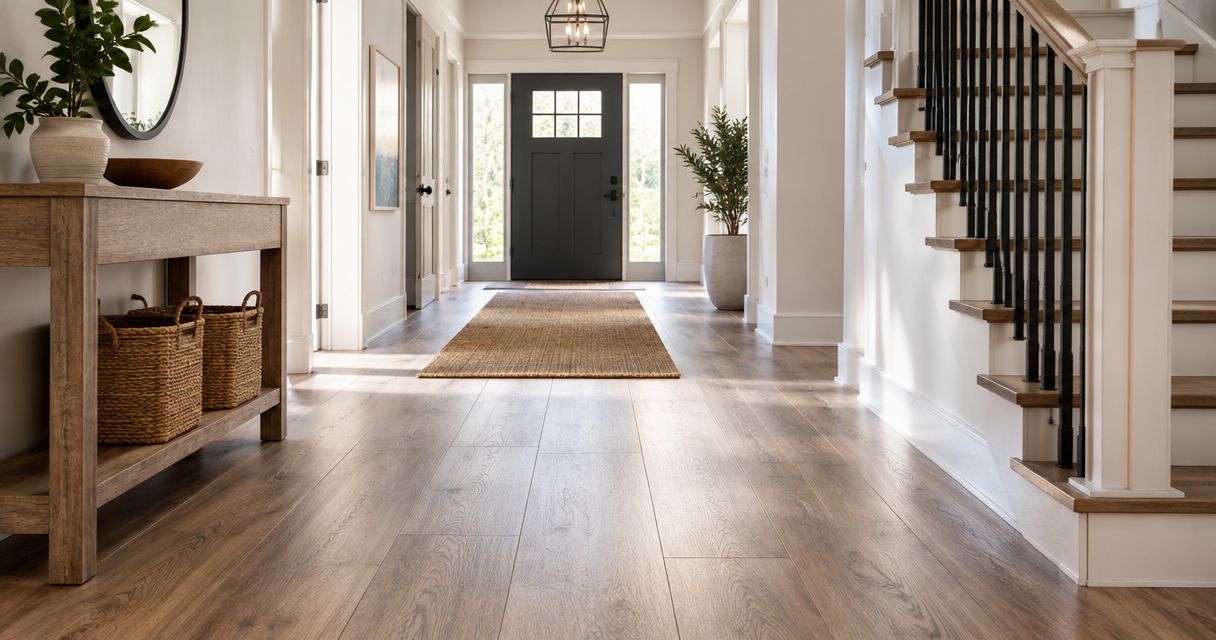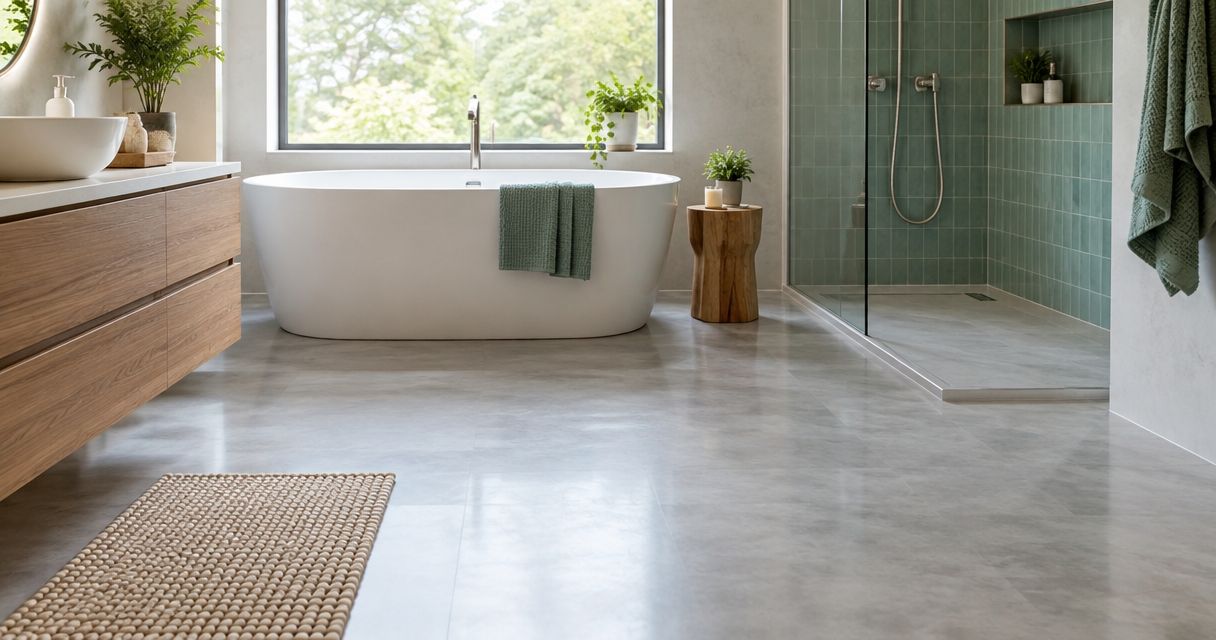
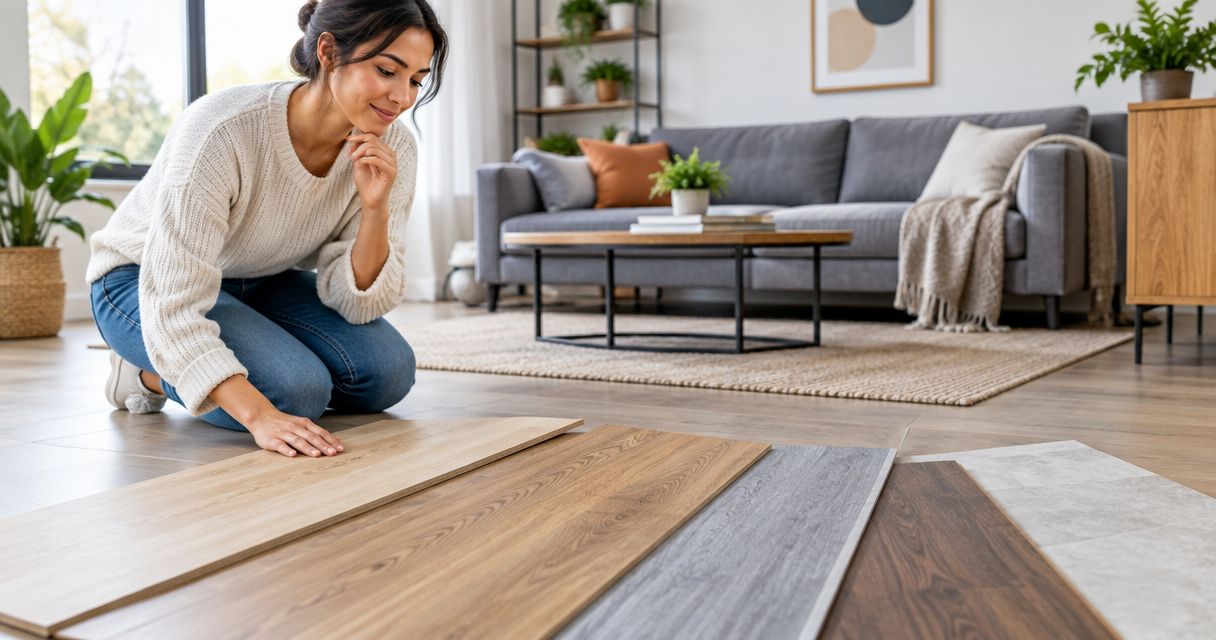
Best overall: vinyl plank for a whole-home project with different room needs. Best budget-focused choice for dry rooms: laminate. Best for a layered real-wood floor: engineered hardwood. Best for homeowners prioritizing future refinishing: solid hardwood. These are the best budget-friendly flooring options to compare in 2026 by complete installation scope, not material alone.
- The best budget-friendly flooring options start with vinyl plank for mixed-room projects and laminate for dry living spaces.
- Engineered hardwood suits real-wood buyers; solid hardwood suits homeowners who prioritize future refinishing.
- Accent Home Improvements helps homeowners choose flooring materials and plan the full installation personally with the owner.
- Compare preparation, removal, stairs, trim, and installation before choosing a whole-home flooring estimate.
Why this matters
A flooring choice stops being budget-friendly when your estimate leaves out work the house actually needs. Old-floor removal, uneven concrete, doorway transitions, and staircase details belong in the decision before you commit to a material.
For homeowners in Surprise, Sun City, Peoria, Glendale, and Phoenix, the useful question is not simply which flooring looks affordable. It is which material fits your rooms without creating avoidable installation complications. Accent Home Improvements is a flooring contractor for homeowners who want the owner personally involved in material selection and full-project planning.
Start with Accent Home Improvements when you want to discuss the whole job rather than choose a floor in isolation. The company installs hardwood, laminate, and vinyl flooring; its confirmed priorities include careful workmanship and a tidy jobsite.
What makes the best budget-friendly flooring options?
Use these criteria to compare your 2026 flooring choices before looking at samples:
- Room suitability: Match the floor to spills, tracked-in dirt, direct sunlight, and how each room gets used.
- Complete installation scope: Include removal, disposal, floor preparation, installation, trim, and transitions in the comparison.
- Subfloor requirements: Check the surface beneath the flooring. A new finish does not correct an uneven or damp base.
- Stair compatibility: Confirm tread, riser, and nosing details before selecting flooring for adjoining rooms.
- Repair and maintenance: Understand cleaning requirements, scratch limitations, and whether damage calls for board replacement or refinishing.
- Whole-home continuity: Decide where one material should continue and where a different floor is justified.
A sample tells you about appearance. These criteria tell you whether that sample belongs in your home and whether the proposed installation covers the work.
Budget-friendly flooring options at a glance
| Flooring option | Best for | Standout feature | Key limitation |
|---|---|---|---|
| Vinyl plank | Mixed-room whole-home projects | Wood-look flooring without a real-wood surface | Cannot be sanded and refinished like solid hardwood |
| Laminate | Dry living areas with a budget-first brief | Decorative surface over a wood-based core | Water resistance varies; moisture can damage unsuitable products |
| Engineered hardwood | Real-wood buyers considering a layered construction | Real-wood surface over a layered core | Refinishing depends on the wear layer and product instructions |
| Solid hardwood | Homeowners prioritizing future refinishing | Solid wood through the board | Moisture movement and installation requirements need careful planning |
This ranking separates use cases rather than declaring one material right for every room. Hardwood belongs in the comparison when real wood matters to you, not because it automatically meets a tight budget.
1. Vinyl plank: best budget-friendly flooring for mixed-room projects
Vinyl plank is the default starting point when you want a wood-look floor across rooms with different demands. It uses a vinyl-based construction rather than a real-wood surface, and individual products differ in wear layers, installation methods, and exposure limits.
For a whole-home project, vinyl plank gives you a material category to discuss across living areas, bedrooms, and kitchen spaces. Bathroom suitability still requires checking the specific product and installation instructions. A water-resistant or waterproof plank does not make the entire room waterproof.
Vinyl plank pros:
- Offers a wood-look option without requiring a real-wood surface.
- Includes products designed for rooms where spills are part of daily life.
- Gives you a way to explore a consistent finish across adjoining rooms.
- Supports a comparison of different installation methods with your contractor.
Vinyl plank cons:
- Does not offer the sanding and refinishing path of solid hardwood.
- Requires product-specific checks for sunlight, temperature, and moisture exposure.
- Still needs a properly prepared subfloor; unevenness is not solved by choosing vinyl.
Before selecting vinyl plank in 2026, ask your installer how the proposed product handles your actual rooms. Discuss sunny patio doors, kitchen appliances, bathroom edges, and transitions to flooring that will remain.
Best for: Homeowners comparing a coordinated wood-look floor for several room types.
Verdict: Buy vinyl plank when its documented room suitability and the complete installation plan match your home. Skip the assumption that every vinyl product works everywhere.
2. Laminate: best budget-friendly flooring for dry living areas
Laminate combines a decorative surface with a wood-based core. It belongs near the top of a budget-focused comparison for bedrooms, living rooms, and other dry spaces, provided the selected product suits the conditions.
The distinction that matters is between appearance and moisture performance. A convincing wood pattern does not tell you whether a laminate product belongs near frequent spills or a damp floor beneath it.
Laminate pros:
- Offers wood-look finishes without a real-wood top layer.
- Provides another material category to compare against vinyl for dry rooms.
- Includes products with documented surface-wear and water-resistance characteristics.
- Lets you plan a consistent finish across connected living spaces.
Laminate cons:
- A wood-based core can swell after unsuitable moisture exposure.
- The decorative surface cannot be sanded and refinished like hardwood.
- Sound and feel depend partly on the product, underlayment, and subfloor preparation.
For your 2026 project, have the installer explain how moisture conditions and underlayment affect the proposed laminate. Ask where transitions are required and whether the same product is appropriate throughout your planned area.
Do not dismiss a transition simply because you prefer an uninterrupted look. The installation instructions and room conditions should determine where the floor can continue, especially across large connected spaces or changes in use.
Best for: Homeowners making dry living areas the priority in a budget-first flooring project.
Verdict: Buy laminate for suitable dry rooms after checking moisture restrictions and installation requirements. Skip products whose intended use does not match the room.
3. Engineered hardwood: best flooring for a layered real-wood option
Engineered hardwood has a real-wood surface over a layered core. Its construction generally reduces dimensional movement compared with solid wood, but it does not remove the need to manage moisture or follow installation instructions.
This option belongs on your shortlist when you want real wood and need to discuss how that preference fits the existing subfloor. It is a material alternative, not a promise of a smaller project total.
Engineered hardwood pros:
- Provides a real-wood surface rather than a printed wood pattern.
- Uses layered construction that generally improves dimensional stability.
- Includes products with different installation methods, subject to manufacturer requirements.
- Gives real-wood buyers an alternative to solid hardwood construction.
Engineered hardwood cons:
- Refinishing depends on the thickness and condition of the wood wear layer.
- Moisture can still damage the flooring.
- Installation and repair requirements differ between products.
Ask to see the specific product instructions before treating engineered hardwood as suitable for your slab or room. Confirm the approved installation method, required moisture checks, and the manufacturer's refinishing guidance.
A real-wood floor also needs an honest conversation about daily use. Chairs, grit, pet nails, and moving furniture can affect the finish; a layered core does not make the surface scratch-proof.
Best for: Homeowners who want real wood and are comparing construction types with an installer.
Verdict: Hold engineered hardwood on your shortlist until the selected product and full installation scope fit your budget. Buy for the real-wood surface, not an assumed saving.
4. Solid hardwood: best flooring for future refinishing potential
Solid hardwood consists of solid wood rather than a decorative layer over another core. Its appeal includes the possibility of sanding and refinishing, although the floor's thickness, condition, and previous sanding determine what is possible.
Choose this category because you want a real-wood floor with that maintenance path. Do not label it budget-friendly without comparing the complete installation against your other options.
Solid hardwood pros:
- Provides solid wood through the board.
- Can offer a future refinishing option when enough usable wood remains.
- Has natural grain variation rather than a repeated printed pattern.
- Allows you to discuss finish renewal rather than only board replacement.
Solid hardwood cons:
- Expands and contracts with changes in moisture conditions.
- Requires careful assessment of the subfloor and installation method.
- Is not a default choice for rooms with frequent water exposure.
For an Arizona home, indoor conditions matter alongside outdoor heat. Discuss moisture control, direct sunlight, and the flooring manufacturer's environmental requirements instead of assuming desert weather removes moisture concerns.
Include adjacent rooms and stairs in that conversation. A solid hardwood selection needs compatible details at edges, changes in height, and stair nosings; the room sample does not settle those decisions.
Best for: Homeowners who prioritize solid wood and the potential to renew its surface later.
Verdict: Hold solid hardwood until the complete scope fits your budget and room conditions. Buy for its material and refinishing potential, not as an automatic budget winner.
Compare the complete job, not just the material
For a useful 2026 estimate, ask every installer to cover the same work. Different totals are difficult to interpret when one includes preparation and another leaves it unresolved.
- Removal: Identify which existing floors come out and how debris is handled.
- Floor preparation: Ask how uneven areas, adhesive residue, and moisture concerns are assessed.
- Room transitions: List doorways, adjoining surfaces, and changes in finished floor height.
- Stair details: Include treads, risers, nosings, landings, and adjoining flooring.
- Finish work: Clarify baseboards, trim, door clearance, and the treatment of visible edges.
Make these items part of the written scope. If an assessment must happen after removal, ask how the installer will explain the finding and obtain your approval before additional work proceeds.
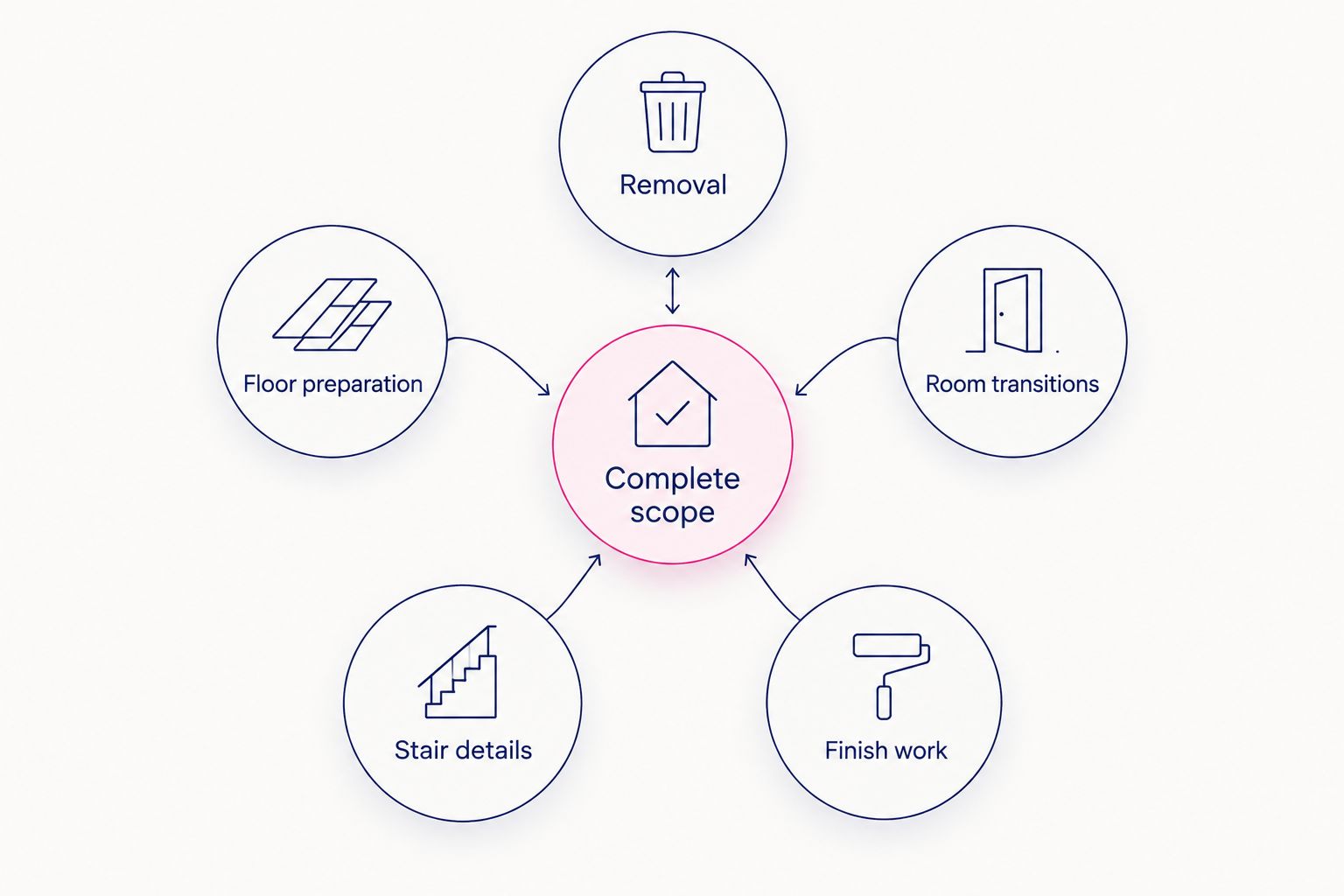
Accent Home Improvements helps homeowners choose materials and plan the full job, with the owner handling the project personally. Use that conversation to connect your flooring choice to the rooms, preparation, and staircase work you actually need.
Plan your whole-home flooring project
Discuss materials, room transitions, staircase flooring, and the full installation scope.
Plan staircase flooring before committing to a material
Stairs are not simply another room measured for flooring. Treads, risers, nosings, and landings need their own plan, and the finished dimensions must meet applicable building requirements.
If your whole-home project includes a staircase, ask whether the preferred vinyl plank, laminate, or hardwood selection has an appropriate stair solution. Confirm how the installer will handle the connection between the stairs and adjacent rooms. A matching color alone does not establish a suitable stair detail.
Choose the stair approach before finalizing the adjoining flooring. That prevents a room-first decision from leaving the staircase unresolved.
Discuss scheduling without relying on a promised finish date
A whole-home installation affects access, furniture, appliances, and the rooms you use every day. Tell your installer whether you will remain in the home and which areas need access during the work.
Discuss the sequence, material delivery, product-specific acclimation requirements, and how preparation findings affect the plan. Ask who handles furniture movement and how work areas will be separated from occupied spaces. These are scope questions, not details to leave until installation begins.
A tidy jobsite is a confirmed priority for Accent Home Improvements. Ask what that means for debris handling and usable spaces during your particular project rather than assuming installation creates no disruption.
How these flooring options were ranked
This 2026 ranking prioritizes room suitability, complete installation scope, subfloor requirements, staircase compatibility, and maintenance. Vinyl plank leads for mixed-room planning; laminate earns the dry-room slot; engineered and solid hardwood serve distinct real-wood preferences.
The ranking is a decision guide, not a product test or a claim that every product within a category performs alike. Your selected flooring's instructions and the condition of your home decide the final fit.
Which budget-friendly flooring should you choose?
Start with vinyl plank if you are undecided about a whole-home wood-look floor. Compare laminate next if dry living spaces dominate the project. Add engineered or solid hardwood when real wood is a priority you want the estimate to accommodate.
For a 2026 installation, the best budget decision is the material you can use appropriately with a clear, complete scope. Ask Accent Home Improvements to help connect your preferred finish with the preparation, stairs, and room transitions the job requires.
FAQ
What's the best budget-friendly flooring for a whole house?
Vinyl plank is the starting recommendation for a whole-home project with different room needs. Compare the specific product's room suitability and the complete installation scope before choosing it over laminate or hardwood.
Is laminate better than vinyl plank for a tight budget?
Laminate belongs on a budget-focused shortlist for dry living areas, while vinyl plank is the starting choice for mixed-room planning. Neither category guarantees a smaller complete project total; preparation, removal, and finishing details also affect the estimate.
Can I use the same flooring in every room?
Use one flooring product throughout only when its instructions and your room conditions support that plan. Kitchens, bathrooms, direct sunlight, and required transitions need specific checks.
Is engineered hardwood the same as laminate?
Engineered hardwood has a real-wood surface, while laminate has a decorative surface over a wood-based core. Refinishing engineered hardwood depends on its wear layer; laminate cannot be sanded and refinished like hardwood.
What should a whole-home flooring estimate include?
A whole-home flooring estimate should define removal, preparation, installation, transitions, trim, and any staircase work. It should also explain how concealed conditions and additional work will be handled.
Can vinyl plank or laminate go on stairs?
Vinyl plank or laminate needs a product-appropriate stair solution rather than an ordinary room installation. Confirm treads, risers, nosings, landings, and applicable building requirements before selecting the adjoining flooring.
How do I get a flooring estimate from Accent Home Improvements?
Request an estimate from Accent Home Improvements and explain the rooms, existing flooring, and staircase work included in your project. The owner handles projects personally and helps with material selection and full-job planning.
One last thing
Approve the edges, not just the floor sample. Before committing, ask how the installation will meet the front door, patio door, bathroom threshold, and bottom stair. Those connections help reveal whether you have a complete flooring plan or only a material selection.