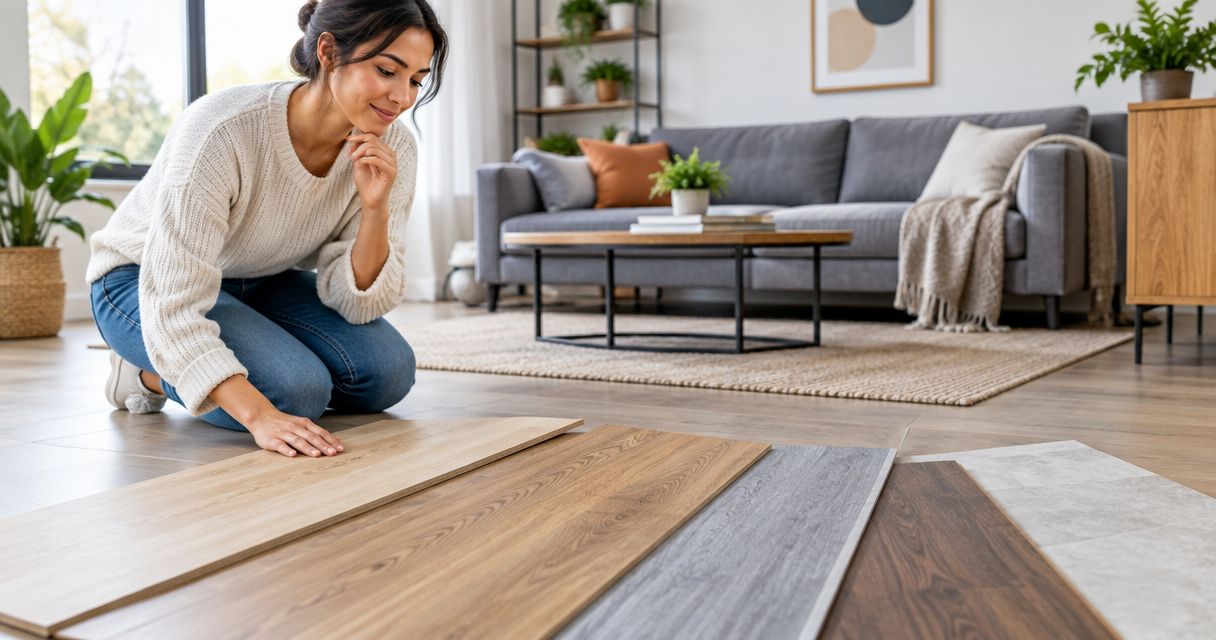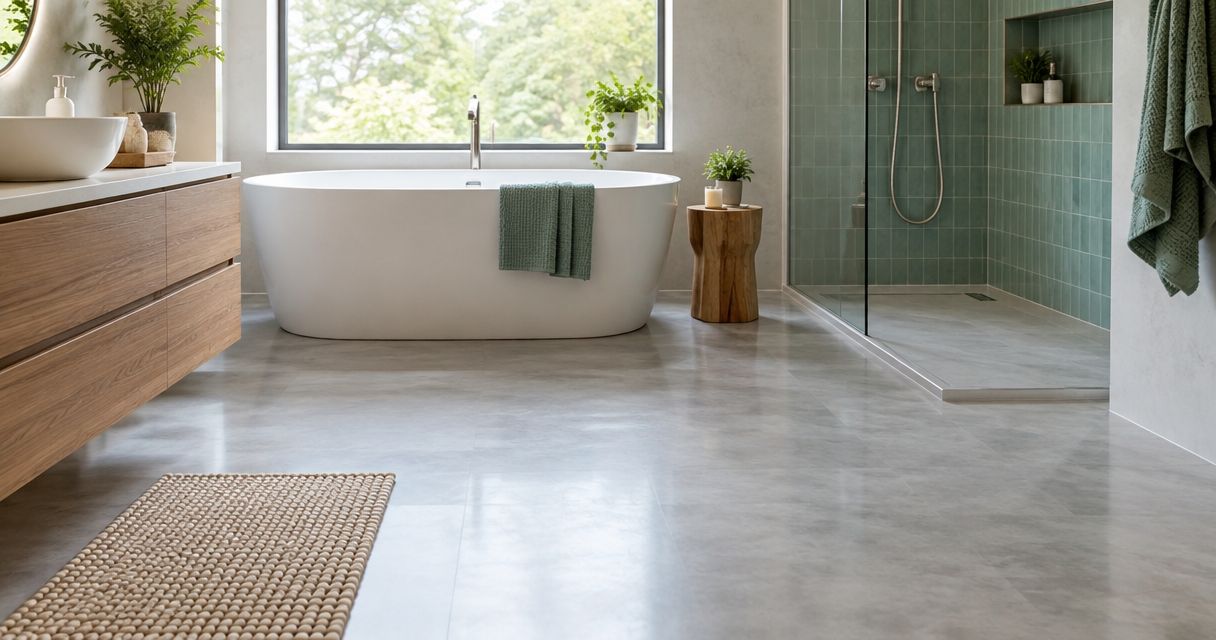
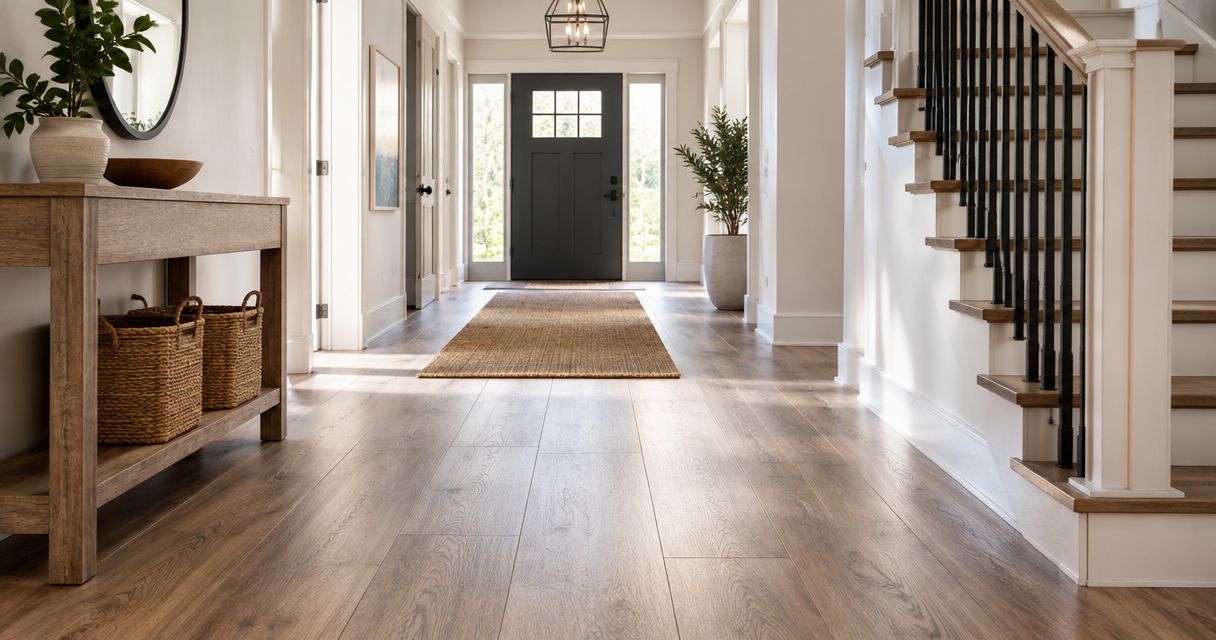
Best overall: vinyl plank. Best for dry, busy hallways: laminate. Best for a real-wood whole-home plan: engineered hardwood. Best for future refinishing: solid hardwood. The best flooring for high-traffic areas in 2026 depends on what enters your doorway, how you maintain the floor, and whether the hallway connects to rooms or stairs you also plan to replace.
- Vinyl plank is the best flooring for high-traffic areas where tracked-in moisture and everyday cleanup drive your decision.
- Laminate suits dry hallways; engineered hardwood suits homeowners who want real wood across connected rooms.
- Solid hardwood suits homeowners who prioritize future refinishing and accept more moisture precautions.
- Accent Home Improvements LLC suits homeowners hiring an owner-involved contractor to plan whole-home flooring installation.
Why this matters
An entryway gets grit from shoes, drips from bags, and repeated traffic along the same narrow route. A hallway connects everything. Choose either floor in isolation and you risk awkward transitions, mismatched heights, or a staircase that looks like an afterthought.
For homeowners planning flooring in Surprise, Sun City, Peoria, Glendale, or Phoenix, start with the complete project, not just the entrance sample. Accent Home Improvements LLC installs hardwood, laminate, and vinyl flooring, with the owner personally helping choose materials and plan the full job.
Your 2026 flooring decision should account for the rooms beyond the hallway. A surface that fits the entry but conflicts with your kitchen, bedrooms, or stair details is not a complete solution.
What makes the best flooring for high-traffic areas?
Use these criteria before choosing a material. The right order depends on your household, but none belongs outside the estimate discussion.
- Moisture exposure: Separate occasional tracked-in drips from recurring water problems. A water-resistant surface does not solve moisture beneath the floor.
- Scratch and wear behavior: Look at the exact product's wear information, finish, and care instructions. Material names alone do not establish scratch resistance.
- Cleanup requirements: Choose a floor you can maintain with the manufacturer's approved methods. Entry grit needs regular removal regardless of material.
- Whole-home continuity: Check connections to kitchens, bedrooms, bathrooms, and stairs before selecting thickness or installation method.
- Repair options: Understand whether damage calls for replacing a plank, repairing a finish, or refinishing a larger area.
- Installation scope: Include removal, floor preparation, transitions, trim, and stair components rather than comparing surface material alone.
Choose the material first, then verify the specific product. Two floors in the same category can have different water restrictions, installation requirements, and repair options.
High-traffic flooring at a glance
These 2026 recommendations separate distinct homeowner priorities. They are not a claim that every product within one category outperforms every product in another.
| Rank and material | Best for | Standout feature | Key limitation |
|---|---|---|---|
| 1. Vinyl plank | Busy entrances with tracked-in moisture | Non-wood plank construction suited to everyday cleanup | Scratches and damaged planks still require attention |
| 2. Laminate | Dry hallways where scratch resistance matters | A protective wear surface over a wood-based core | Water reaching vulnerable joints or edges can cause swelling |
| 3. Engineered hardwood | Real-wood continuity across connected rooms | A real-wood surface over a layered construction | Refinishing options depend on the wear layer |
| 4. Solid hardwood | Long-term ownership with refinishing as a priority | Solid wood that can be refinished when its condition allows | Moisture and grit require consistent precautions |
1. Vinyl plank: best for busy entrances with tracked-in moisture
Vinyl plank is the default recommendation when you want a wood-look floor without choosing a wood-based surface for the entrance. Its construction makes it a practical starting point for homes where shoes, pets, and bags bring moisture through the front door.
The exact product still matters. Check the manufacturer's installation and cleaning instructions, especially around exterior doors and areas exposed to strong sunlight. Do not treat the word waterproof as permission to ignore a wet subfloor or water entering at the perimeter.
Vinyl plank pros:
- Provides a wood-look option without a real-wood wear surface.
- Suits routine entryway cleanup when you follow approved cleaning methods.
- Offers a material option to discuss for connected living spaces.
- Avoids the wood-core swelling concern associated with conventional laminate.
Vinyl plank cons:
- Sharp grit and dragging furniture can scratch the surface.
- Damaged planks are not repaired by sanding and refinishing like suitable hardwood.
- Uneven flooring beneath it still requires preparation; vinyl does not make the problem disappear.
For a whole-home installation, discuss plank direction, doorway transitions, and stair treatment before approving the material. A plank chosen for the hallway does not automatically supply every component needed for the stairs.
Best for: Homeowners who put moisture tolerance and practical cleanup ahead of having real wood.
Verdict: Buy vinyl plank for a busy entryway after confirming the exact product's conditions and the full installation scope.
2. Laminate: best for dry hallways where scratches matter
Laminate is a useful choice when your hallway stays dry and your main concern is everyday surface wear. Its decorative surface and protective wear layer sit above a wood-based core, so the surface and the edges need different kinds of attention.
Do not reject or approve laminate based on one broad label. Some products have specific water-resistance provisions, but those provisions come with conditions. Ask what applies to the exact floor, including spills, cleaning, joints, and installation.
Laminate pros:
- Offers wood-look designs for connected rooms and hallways.
- A protective wear surface makes scratch performance a useful product-selection criterion.
- Works as a candidate for dry living areas in a whole-home plan.
- Lets you compare appearance and surface performance without requiring a real-wood finish.
Laminate cons:
- Moisture reaching a vulnerable core can cause swelling.
- A worn or damaged decorative surface cannot be sanded into a new wood finish.
- Sound and feel depend partly on the installation system and floor beneath it.
Do not make laminate your entryway default just because you like its sample. First check whether wet shoes, pet bowls, cleaning habits, or nearby rooms create an exposure the selected product does not allow.
For a 2026 project, ask the installer to identify where laminate stops, where transitions go, and whether stair pieces suit the selected floor. Resolve those details before materials are ordered.
Best for: Homeowners with dry, busy hallways who prioritize scratch performance and a wood-look finish.
Verdict: Buy laminate for a dry hallway; skip it where moisture exposure conflicts with the selected product's instructions.
3. Engineered hardwood: best for real-wood whole-home continuity
Engineered hardwood has a real-wood surface over a layered construction. It belongs on your shortlist when the hallway is part of a larger plan and you want the feel and appearance of wood across connected spaces.
Layered construction does not make engineered hardwood waterproof. Finish care, moisture conditions, and the manufacturer's installation requirements remain part of the decision. The hallway needs the same protection from grit that other wood-floored rooms need.
Engineered hardwood pros:
- Provides a genuine wood surface rather than a printed wood-look layer.
- Supports a coordinated material plan across hallways and living spaces.
- Layered construction limits some dimensional movement compared with solid wood.
- Some products permit refinishing, depending on their construction and condition.
Engineered hardwood cons:
- Refinishing is not available to the same extent on every product.
- Water and abrasive grit can damage the floor or its finish.
- Matching stair components and transitions require advance planning.
Ask about the wear layer before assuming you can sand the floor later. Also ask whether the specified product and installation method suit the subfloor in your home; the word engineered is not enough to answer that question.
Accent Home Improvements LLC helps homeowners choose materials and plan the full job. For engineered hardwood flooring, make the entryway, adjoining rooms, and staircase part of that discussion rather than approving each separately.
Best for: Homeowners who want real wood throughout connected spaces and accept wood-floor care requirements.
Verdict: Buy engineered hardwood for real-wood continuity after confirming installation suitability and repair options.
4. Solid hardwood: best for homeowners who prioritize refinishing
Solid hardwood is the strongest candidate here when future refinishing is central to your decision. Its solid-wood construction allows sanding and refinishing when enough usable wood remains and the floor's condition permits it.
That repair path is different from immunity to damage. Grit can wear the finish, furniture can mark the surface, and moisture can affect the boards. You need to be comfortable protecting the entrance and responding to spills promptly.
Solid hardwood pros:
- Provides a real-wood surface throughout the board.
- Offers a refinishing path that many surface-layer products do not.
- Can connect hallways and living spaces with one material.
- Lets you discuss future finish renewal rather than only plank replacement.
Solid hardwood cons:
- Moisture-related movement needs attention during product selection and installation.
- Busy entrances require regular grit removal and finish care.
- Refinishing is a larger maintenance project, not an instant spot fix.
For Arizona homes, evaluate the actual indoor conditions and subfloor instead of assuming the outdoor climate settles the decision. Air conditioning, household moisture, and installation requirements all belong in the assessment.
Keep stair finish and tread details in the same plan. A hallway sample alone does not establish how the staircase will look or how its edges will be finished.
Best for: Homeowners planning long-term ownership who value refinishing and accept maintenance responsibilities.
Verdict: Buy solid hardwood when its installation requirements fit your home and refinishing matters more than moisture tolerance.
Plan the entrance, connected rooms, and stairs together
A whole-home flooring estimate should show where each material starts and stops. Mark the entrance, hallway, connected rooms, and staircase on the same plan. That prevents a good material choice from becoming a disconnected installation.
For your 2026 estimate, ask for these parts of the scope to be addressed:
- Floor preparation: Removal of existing flooring, subfloor assessment, and required correction.
- Doorway transitions: Changes in material or height, exterior thresholds, and door clearance.
- Staircase flooring: Treads, risers, nosings, landings, and the connection to the upstairs hallway.
- Trim work: Treatment of baseboards, shoe molding, and exposed edges.
- Household access: Furniture movement, room access, pets, and the sequence of work.
- Cleanup: How debris and the work area will be managed during the job.
An entrance mat and a planned transition help keep tracked-in grit from becoming a whole-home problem. Keep the mat compatible with the selected flooring; some backing materials are not approved for every surface.
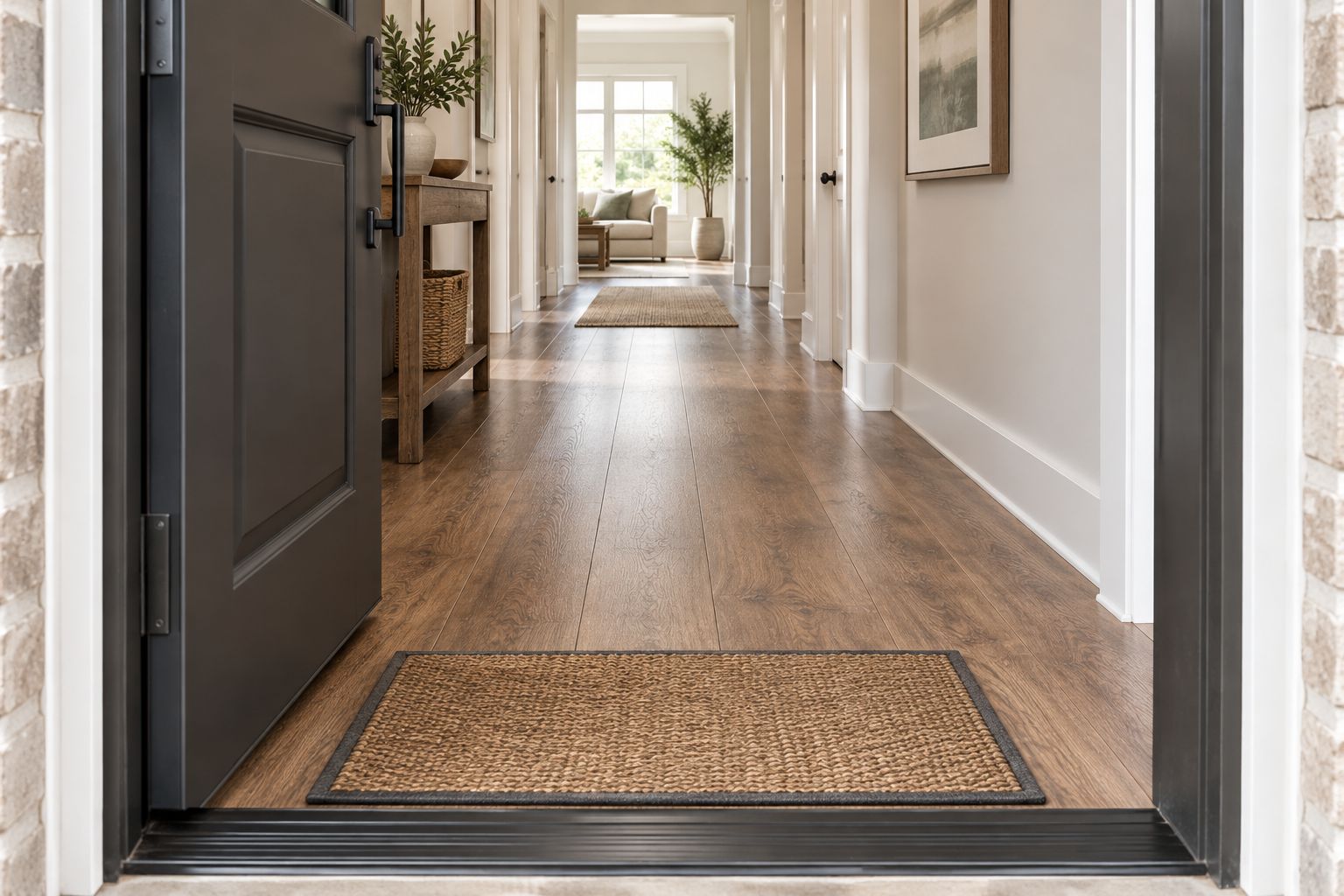
Stairs deserve separate attention even when you choose one flooring material throughout the home. Planks, stair edges, and landing transitions have different roles. Ask your installer to explain the proposed details rather than assuming a matching color means a complete match.
Scheduling also depends on the scope, material selection, floor preparation, and household access. Request the proposed sequence before committing; do not compare installers on an assumed completion date.
How the rankings work
This 2026 ranking gives moisture tolerance priority at the entrance, surface wear priority in dry hallways, and repair options priority for long-term ownership. Whole-home continuity and installation requirements apply to every recommendation.
The ranking compares material types, not tested product models. Use it to build your shortlist, then judge the exact flooring and written installation scope. A strong category choice still needs a suitable product and careful workmanship.
Which high-traffic flooring should you choose?
Choose vinyl plank if you are undecided and the entrance regularly brings in moisture. Choose laminate for a dry hallway, engineered hardwood for real-wood continuity, or solid hardwood when future refinishing is your main priority.
Accent Home Improvements LLC is a fit for homeowners who want owner-involved flooring installation planning, with careful workmanship and a tidy jobsite as priorities. Request an estimate that includes your hallway, adjoining rooms, and staircase—not just the visible floor area.
Plan your whole-home flooring installation
Discuss materials, connected rooms, stair details, and the complete installation scope.
FAQ
What's the best flooring for high-traffic areas near the front door?
Vinyl plank is the default recommendation when tracked-in moisture and routine cleanup are the main concerns. Verify the exact product's installation and care requirements, and include threshold and subfloor work in the estimate.
Is laminate better than vinyl plank for a busy hallway?
Laminate is a strong candidate for a dry hallway where scratch performance matters; vinyl plank is the better starting point where moisture exposure drives the decision. Compare the specific products rather than assuming every floor in either category performs identically.
Can hardwood work in a high-traffic entryway?
Hardwood can work in a high-traffic entryway when you accept its moisture precautions and finish-care needs. Remove grit regularly, use compatible mats, and confirm that the selected floor suits your home's conditions.
Is engineered hardwood waterproof?
Engineered hardwood is not waterproof. Its real-wood surface and layered construction still require moisture control and cleaning methods approved by the manufacturer.
Should my hallway flooring match my staircase?
Plan the hallway and staircase together, whether you choose a matching or contrasting finish. Confirm tread, riser, nosing, and landing details before approving materials.
What affects the cost of whole-home flooring installation?
Material selection, removal, floor preparation, room layout, transitions, trim, and staircase work affect the installation estimate. Ask for those items to be addressed so you can compare equivalent scopes.
Who should I hire to plan flooring across connected rooms?
Accent Home Improvements LLC suits homeowners who want an owner-involved flooring contractor to help select materials and plan the full job. The company installs hardwood, laminate, and vinyl flooring and prioritizes careful workmanship and a tidy jobsite.
One last thing
Take the flooring sample to the front door before you approve it. Look at it in that location's light, beside the threshold, and against the adjoining floor. Then ask how the same choice connects to your stairs; the entrance sample should start the whole-home conversation, not end it.