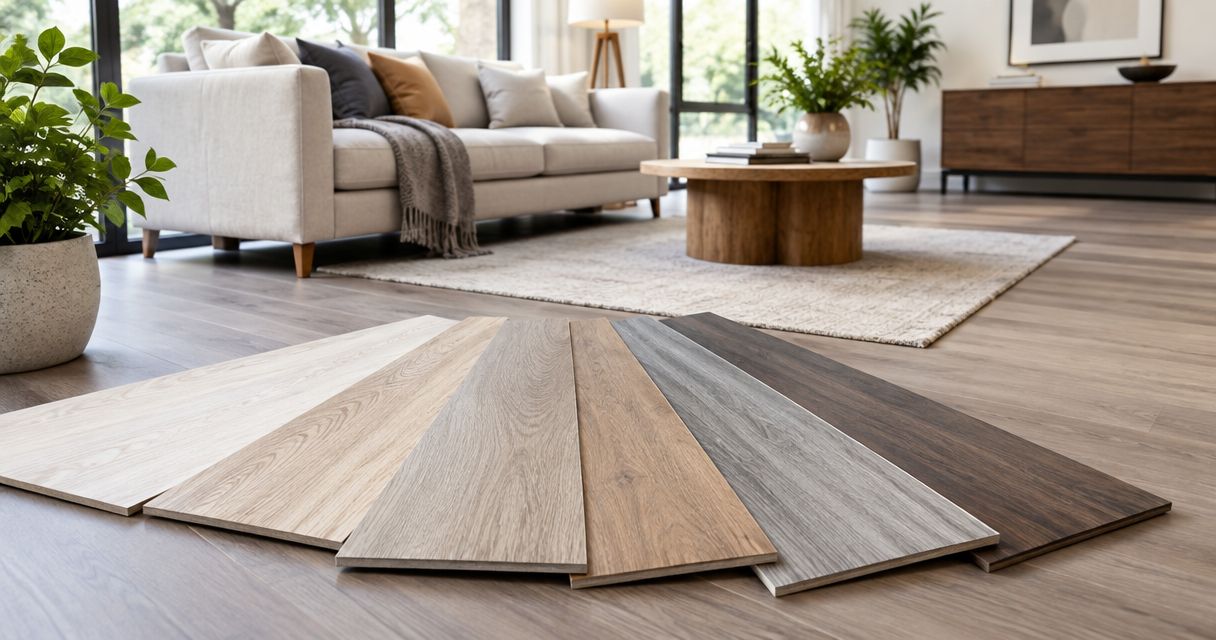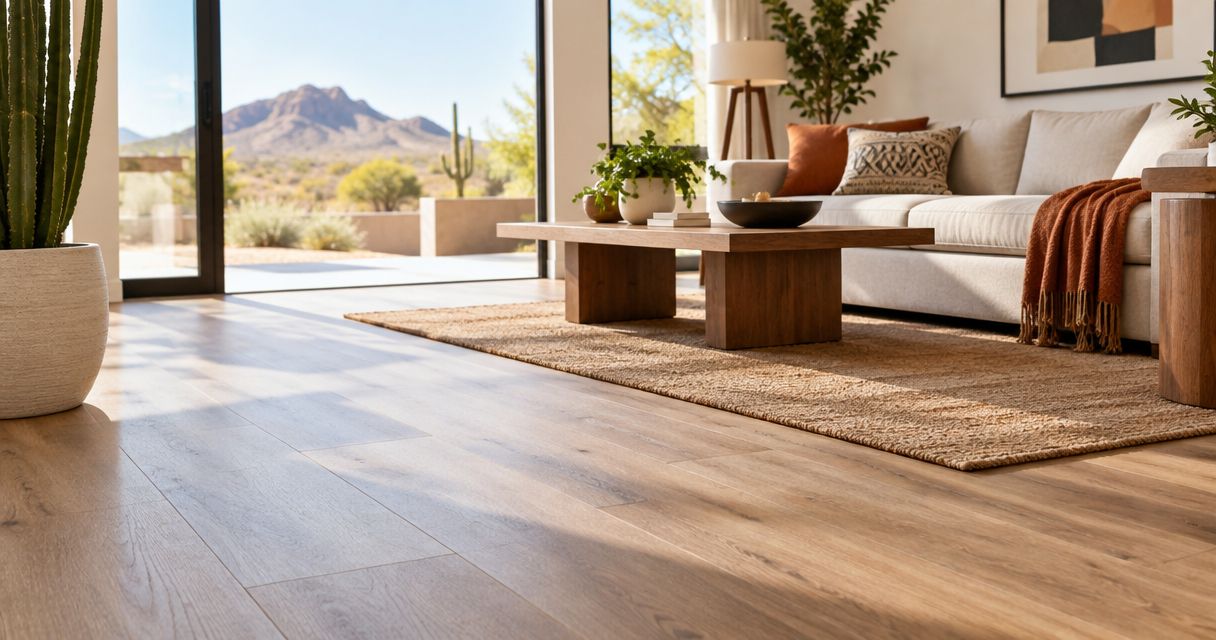
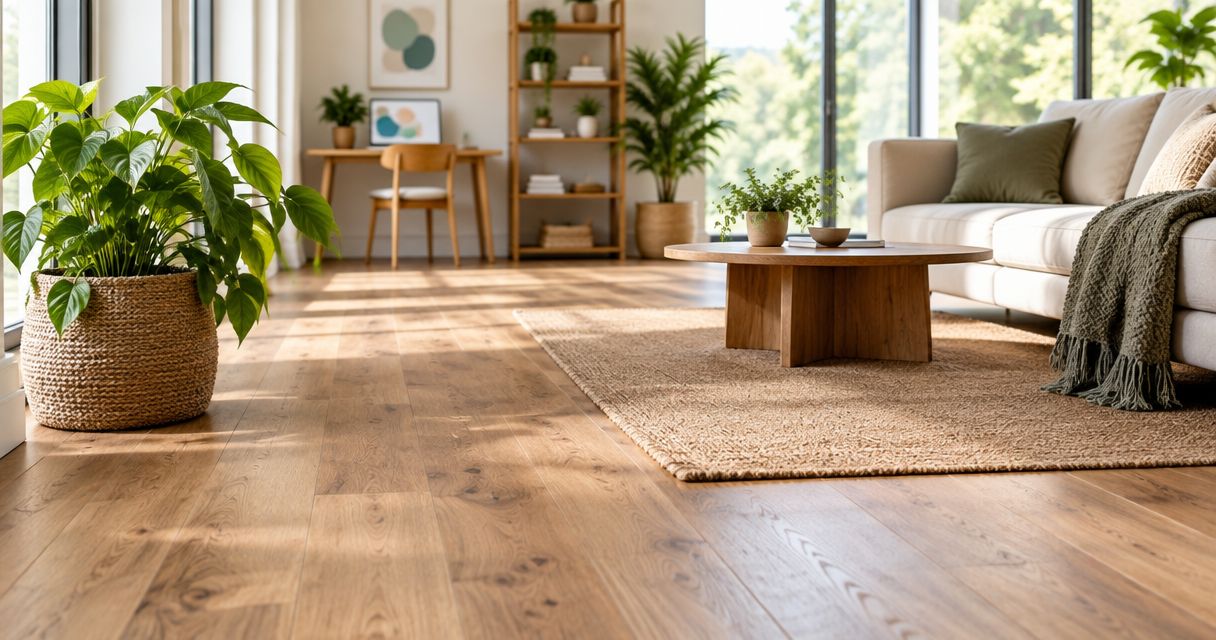
Best overall: responsibly sourced solid hardwood for dry rooms. Best for material reuse: reclaimed hardwood. Best for a practical alternative to wood: documented low-emission laminate. The best eco-friendly flooring options in 2026 balance sourcing, indoor emissions, repairability, and the demands of your whole-home project—not just a green label.
- The best eco-friendly flooring options start with documented sourcing, low emissions, and a floor suited to your rooms.
- Solid hardwood wins for repairability; reclaimed hardwood wins for reusing existing material.
- Engineered hardwood, cork, and laminate need product-specific checks before you choose.
- Vinyl plank is a practical flooring option, not the default environmental winner.
- Accent Home Improvements suits homeowners who want owner-led flooring selection and whole-home installation planning.
Why this matters for your Arizona home
Replacing flooring across a home creates decisions that a sample board cannot answer. Your bedrooms, kitchen, entryway, and staircase face different demands, and an unsuitable material can turn an environmental purchase into another replacement project.
For homeowners in Surprise, Sun City, Peoria, Glendale, and Phoenix, start with the complete installation scope. Accent Home Improvements installs hardwood, laminate, and vinyl flooring, with the owner personally helping choose materials and plan the job while prioritizing careful workmanship and a tidy jobsite.
Choose the floor you can maintain and keep, then compare its environmental documentation. For your 2026 project, a natural material without useful sourcing information is not automatically a better purchase than a manufactured floor with clear documentation.
What makes the best eco-friendly flooring options?
Use these criteria before comparing samples:
- Material sourcing: Look for traceable wood sourcing, verified reclaimed material, or clearly described raw materials. A wood-look pattern says nothing about sourcing.
- Indoor emissions: Ask for product-specific emissions documentation. Check adhesives and underlayment separately rather than assuming the flooring certificate covers everything.
- Repairability: Find out whether scratches, damaged boards, or a worn finish can be repaired without replacing the entire floor.
- Room suitability: Match the flooring to moisture exposure, household traffic, sunlight, and the manufacturer's installation requirements.
- Full-job waste: Include removal, layout cuts, packaging, transitions, and leftover material in the project discussion.
- End-of-life options: Ask who actually accepts the old material locally. A theoretical recycling claim is not a disposal plan.
Request 3 documents before approving a product: sourcing information, emissions documentation, and installation instructions. These answer different questions; none replaces the others.
Eco-friendly flooring options at a glance
This 2026 ranking separates material choices by their strongest use case. It does not treat every product within a category as environmentally equivalent.
| Flooring option | Best for | Standout feature | Key limitation |
|---|---|---|---|
| Responsibly sourced solid hardwood | Repairable floors in dry rooms | A solid wood surface that can be refinished when its condition permits | Moisture sensitivity and product-specific sourcing |
| Reclaimed hardwood | Reusing existing wood | Gives recovered material another use | Condition, preparation, and matching require inspection |
| Engineered hardwood | Real wood with layered construction | A wood surface over a supporting core | Refinishing depends on the surface layer |
| Cork flooring | Softer-feeling dry living spaces | Uses harvested cork bark | Dents, moisture, and finish care need attention |
| Low-emission laminate | Busy dry rooms without a solid wood floor | A protective wear surface over a manufactured core | A worn decorative surface cannot be sanded back |
| Vinyl plank | Rooms where water resistance drives the choice | Product-specific water-resistant or waterproof construction | PVC-based material with limited repair and disposal options |
1. Solid hardwood: best eco-friendly flooring for repairable rooms
Responsibly sourced solid hardwood is the default recommendation for dry rooms where you want a floor that supports future refinishing. Its environmental case depends on both the source of the wood and your ability to keep the floor in service.
Choose a finish and species suited to your household rather than buying on appearance alone. In a 2026 whole-home plan, discuss kitchens, exterior-door areas, and direct sunlight separately instead of assuming the same specification works everywhere.
Solid hardwood pros:
- Can be refinished when sufficient usable wood remains.
- Supports repair of individual boards in suitable installations.
- Offers a clear opportunity to request certified wood sourcing.
Solid hardwood cons:
- Standing water and moisture changes can damage wood.
- Refinishing creates disruption and requires finish selection.
- Natural appearance alone does not prove responsible sourcing.
Best for: Homeowners prioritizing a repairable floor in bedrooms, living rooms, and other suitable dry spaces.
Ask how the proposed installation will handle transitions and stair connections. A repairable room floor is less useful if the adjoining details are difficult to maintain.
Verdict: Buy responsibly sourced solid hardwood for dry rooms when repairability is your main priority.
2. Reclaimed hardwood: best eco-friendly flooring for material reuse
Reclaimed hardwood reuses wood recovered from an earlier application. That is a specific environmental advantage, but it does not guarantee that every board is ready to install or free from treatment concerns.
Have the material assessed for condition, previous finishes, dimensions, and suitability before committing. Accent Home Improvements installs hardwood; discuss a proposed reclaimed material with the owner rather than assuming every reclaimed product fits the installation plan.
Reclaimed hardwood pros:
- Reuses existing wood instead of relying entirely on newly harvested material.
- Retains natural variation that suits character-focused rooms.
- Can support refinishing when board condition and usable thickness permit.
Reclaimed hardwood cons:
- Previous coatings and treatments need investigation.
- Uneven dimensions or damage can increase preparation work.
- Matching replacement boards requires planning.
Best for: Homeowners whose main environmental goal is material reuse and who accept visible variation.
Ask about the wood's previous use and preparation. Reclaimed is a sourcing description, not an indoor-air certificate.
Verdict: Buy reclaimed hardwood only after its condition, history, and installation suitability are confirmed.
3. Engineered hardwood: best eco-friendly flooring for layered wood
Engineered hardwood combines a real wood surface with a supporting core. Its layered construction offers a different approach from solid hardwood, but its environmental performance still depends on sourcing, adhesives, surface thickness, and maintenance.
Compare the 2 hardwood formats directly: solid hardwood and engineered hardwood. Do not assume they have identical refinishing options simply because both display real wood.
Engineered hardwood pros:
- Provides a real wood walking surface.
- Layered construction helps manage dimensional movement.
- Can carry sourcing and emissions documentation for the specific product.
Engineered hardwood cons:
- Thin surface layers restrict future sanding.
- Adhesives and core materials require separate scrutiny.
- Water exposure remains a concern; real wood is not inherently waterproof.
Best for: Homeowners who want real wood and need to evaluate a layered construction for their installation conditions.
Ask for written refinishing guidance, not a verbal assurance that the floor can be sanded later. Include the proposed installation adhesive in your emissions checks.
Verdict: Buy engineered hardwood when its construction fits the job and its maintenance limits are clear.
4. Cork: best eco-friendly flooring for softer-feeling dry spaces
Cork flooring uses material harvested from cork oak bark. The tree can remain standing after bark harvesting, but the finished flooring also contains binders, finishes, or other layers that deserve inspection.
Cork belongs on an environmental shortlist for homeowners who value a softer feel underfoot. Treat it as a material to investigate, not as an assumed service or product offered by Accent Home Improvements.
Cork pros:
- Uses bark that can be harvested without felling the tree.
- Offers a softer-feeling surface than many hard flooring materials.
- Provides a natural-material alternative for appropriate dry rooms.
Cork cons:
- Heavy furniture and concentrated pressure can leave dents.
- Moisture suitability depends on the exact product and installation.
- Finish maintenance and sunlight exposure need consideration.
Best for: Homeowners prioritizing underfoot comfort in suitable dry living spaces.
Check whether the product is a glue-down tile or a floating plank with a separate core. Those constructions are not interchangeable when evaluating moisture exposure or installation materials.
Verdict: Hold until the product's finish, room suitability, and installer fit are confirmed.
5. Laminate: best eco-friendly flooring for busy dry rooms
Laminate uses a manufactured core, decorative layer, and protective wear surface. It is not solid wood, and a wood-grain design does not establish environmental credentials.
For a 2026 laminate flooring project, evaluate the actual product's emissions documentation, core sourcing, and room-use instructions. Laminate becomes a stronger practical choice when its surface suits your household and prevents an avoidable early replacement.
Laminate pros:
- Offers wear-resistant surfaces designed for everyday household use.
- Provides wood-look flooring without a solid hardwood construction.
- Can be compared using product-specific sourcing and emissions information.
Laminate cons:
- The decorative surface cannot be restored through sanding.
- Moisture tolerance varies by construction and installation requirements.
- Damaged boards can be difficult to replace in some layouts.
Best for: Homeowners choosing a durable-use floor for busy dry rooms rather than prioritizing future refinishing.
Ask how an isolated damaged board would be replaced. Also ask whether the proposed underlayment is required, permitted, or unnecessary for that exact product.
Verdict: Buy laminate for suitable dry rooms when its documentation and repair limitations are acceptable.
6. Vinyl plank: best practical exception for water-sensitive areas
Vinyl plank is PVC-based flooring. Certain products offer water-resistant or waterproof construction, making them relevant when household water exposure is a central selection issue.
That practical benefit does not make vinyl plank the environmental winner. Compare its emissions documentation, expected use, repair method, and disposal route before selecting it for your 2026 whole-home project.
Vinyl plank pros:
- Offers product-specific options for water exposure.
- Avoids the sanding and refinishing process associated with wood.
- Supports consistent-looking layouts across compatible rooms.
Vinyl plank cons:
- Its PVC-based construction is not a renewable wood material.
- A worn surface cannot be refinished like solid hardwood.
- Recycling depends on a real collection route, not a generic claim.
Best for: Homeowners whose room-use requirements put water resistance ahead of renewable-material sourcing.
A waterproof plank does not waterproof your subfloor or excuse unresolved moisture. Ask what the product permits and how the installer will assess the floor beneath it.
Verdict: Skip vinyl plank as the default green choice; buy it when documented room suitability drives the decision.
Plan the whole job, including the staircase
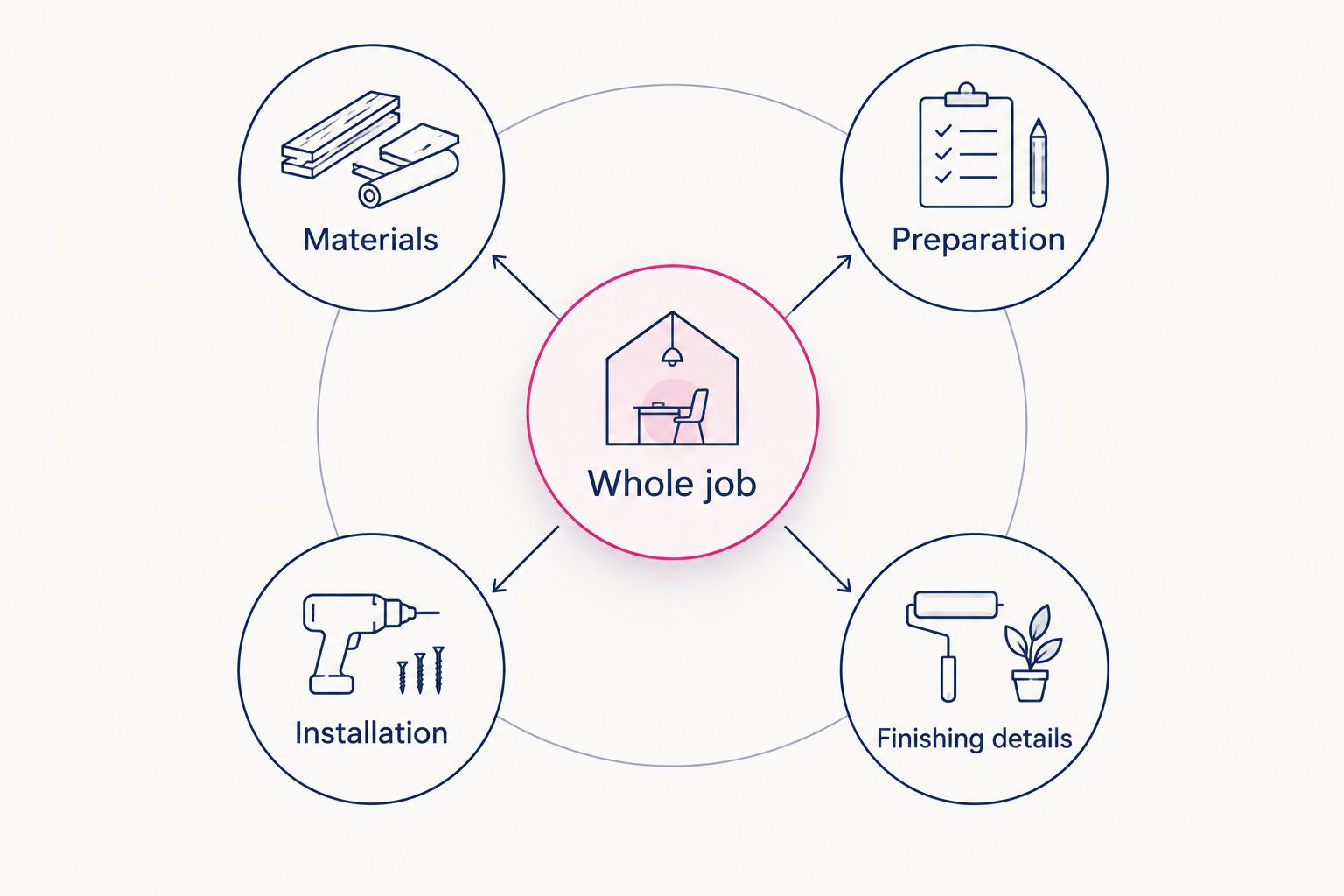
Break your estimate into 4 parts: materials, preparation, installation, and finishing details. This keeps the environmental discussion connected to the work you are actually hiring someone to complete.
- Materials: Identify flooring, underlayment, adhesives, finishes, and matching trim.
- Preparation: Discuss removal, subfloor condition, moisture assessment, and disposal.
- Installation: Confirm room boundaries, furniture access, and the sequence of occupied spaces.
- Finishing details: Include transitions, baseboards, door clearances, stair treads, and stair nosings.
Staircase flooring needs its own scope. Ask which tread and nosing system suits the selected material, how exposed edges will be finished, and whether the stair finish will match adjoining rooms.
Discuss scheduling after the material and preparation requirements are understood. Product acclimation instructions, removal work, and subfloor repairs affect sequencing; a sample selection alone does not establish an installation date.
Plan your whole-home flooring project
Discuss materials, room transitions, and staircase details with an owner-led flooring contractor.
How these flooring options were ranked
This ranking prioritizes documented sourcing, repairability, indoor emissions, and suitability for a whole-home installation. It compares material categories, not laboratory-tested products or verified lifecycle results for individual manufacturers.
Solid hardwood leads for repairability in dry rooms; reclaimed wood leads for reuse. Engineered hardwood, cork, laminate, and vinyl occupy distinct use cases because their construction and maintenance limitations differ.
Which eco-friendly flooring should you choose?
Choose responsibly sourced solid hardwood as your starting point for dry rooms, then adjust room by room. Select reclaimed wood when reuse is your priority, engineered hardwood when its construction fits the job, or documented laminate when everyday wear matters more than refinishing.
Accent Home Improvements is best for homeowners who want owner-led hardwood, laminate, or vinyl flooring selection and whole-home installation planning. Bring your room list, staircase requirements, and product documents to the estimate discussion—not just a preferred color.
FAQ
What's the best eco-friendly flooring for an Arizona home?
Responsibly sourced solid hardwood is the strongest starting point for repairable flooring in dry rooms. Check moisture exposure, sunlight, sourcing, and finish requirements before extending it throughout the home.
Is reclaimed hardwood better than new hardwood?
Reclaimed hardwood is better for the specific goal of reusing existing wood. Its condition, previous treatments, and preparation requirements still need inspection before installation.
Is engineered hardwood environmentally friendly?
Engineered hardwood needs product-specific environmental checks. Review wood sourcing, emissions documentation, adhesives, and the surface layer's refinishing limits rather than judging it by its real wood appearance.
Is laminate greener than vinyl plank?
Neither laminate nor vinyl plank is automatically the greener choice. Compare documented sourcing, emissions, room suitability, repair options, and an actual disposal route for the products under consideration.
Does waterproof flooring prevent subfloor moisture problems?
No, waterproof flooring does not resolve moisture problems beneath it. The installer still needs to assess the subfloor and follow the product's moisture and installation requirements.
What affects the cost of eco-friendly flooring installation?
Material selection, removal, subfloor preparation, room layout, and finishing details affect the installation estimate. Staircases, transitions, adhesives, and disposal should be included in the scope rather than treated as afterthoughts.
Can I use the same flooring on rooms and stairs?
Matching room and staircase flooring requires a compatible tread and nosing plan. Confirm the stair system and exposed-edge details before approving the room flooring.
One last thing
Ask about the adhesive, not just the plank. A flooring product's emissions certificate does not automatically cover the adhesive, underlayment, or finish added during installation. Put those materials on the same approval list so your environmental choice covers the complete floor assembly.