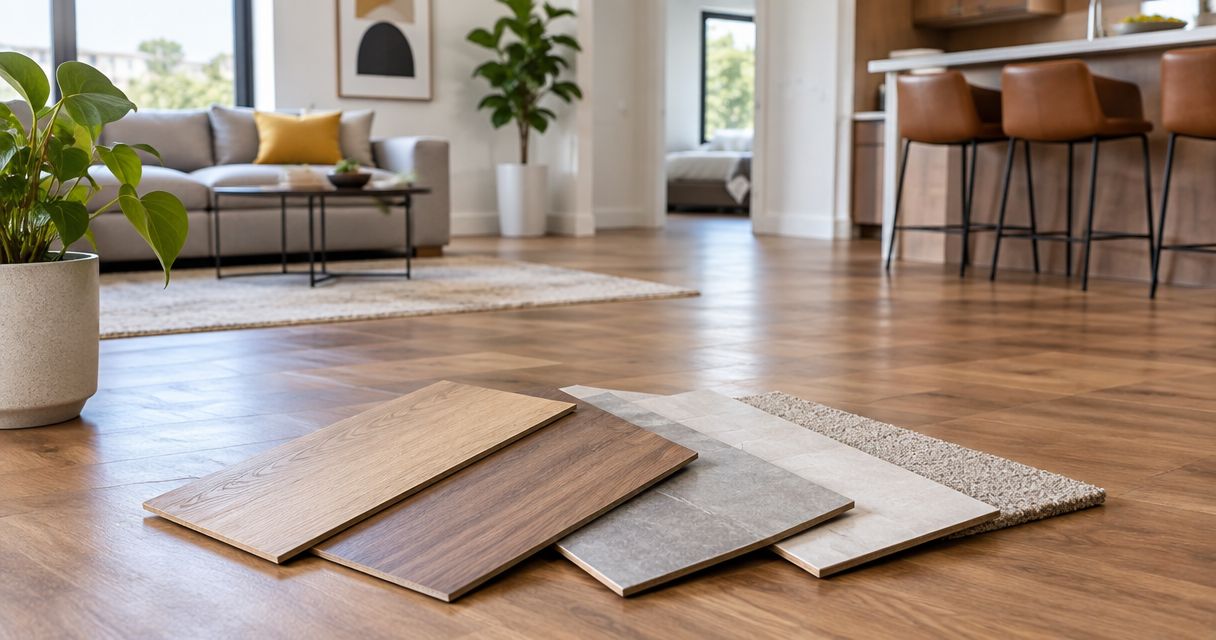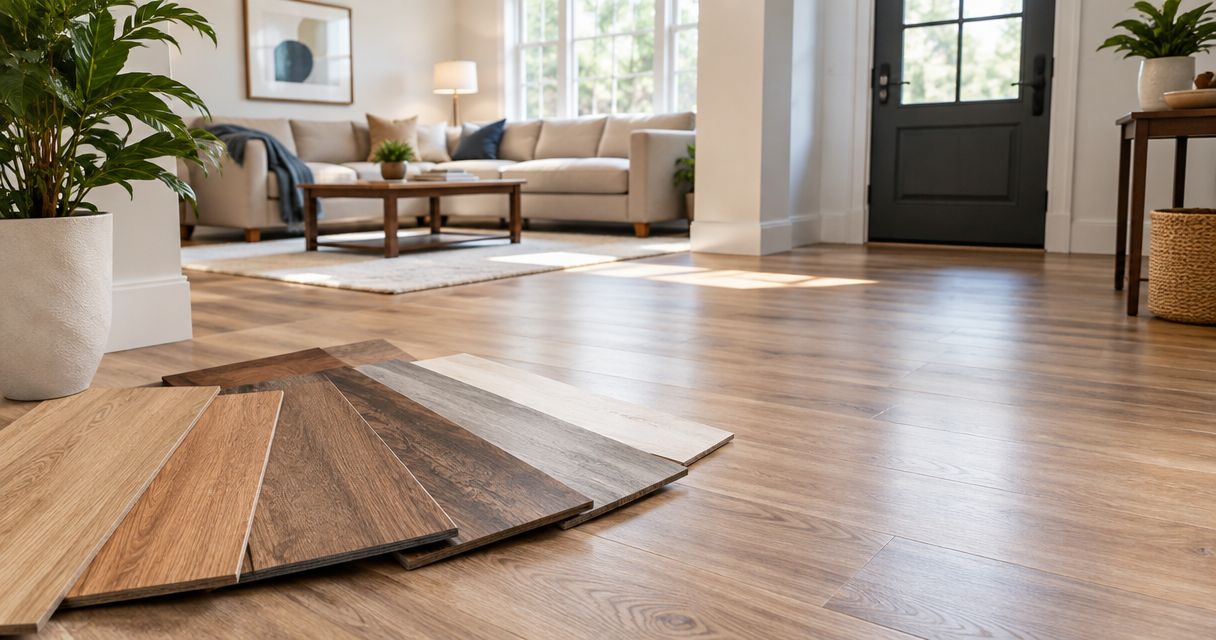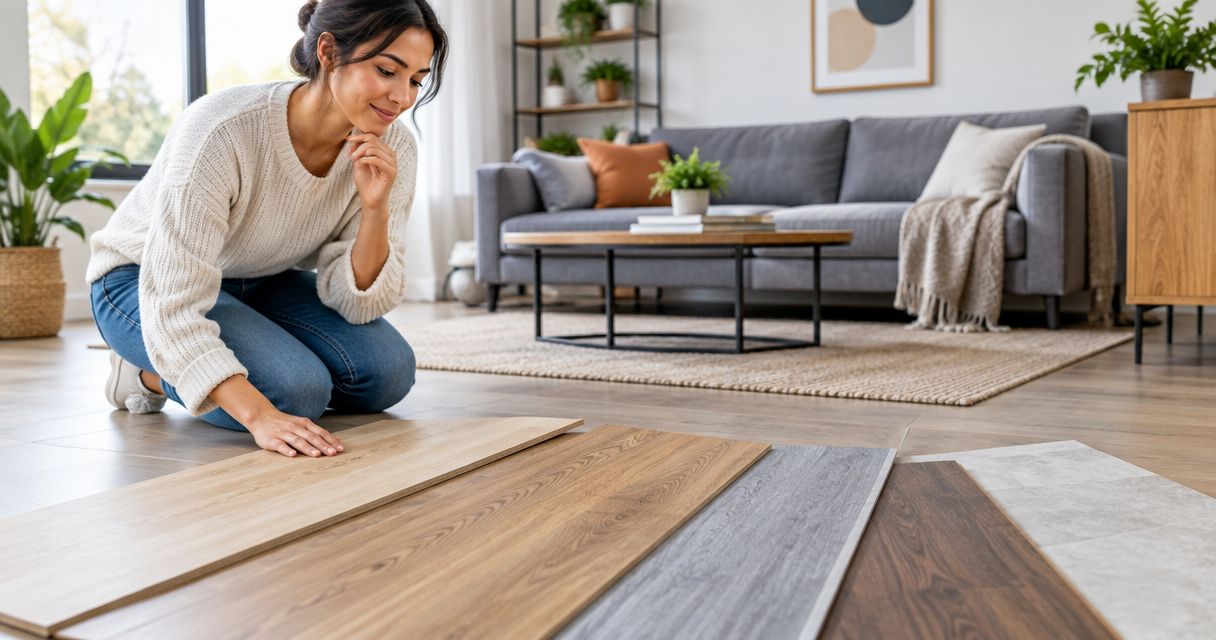
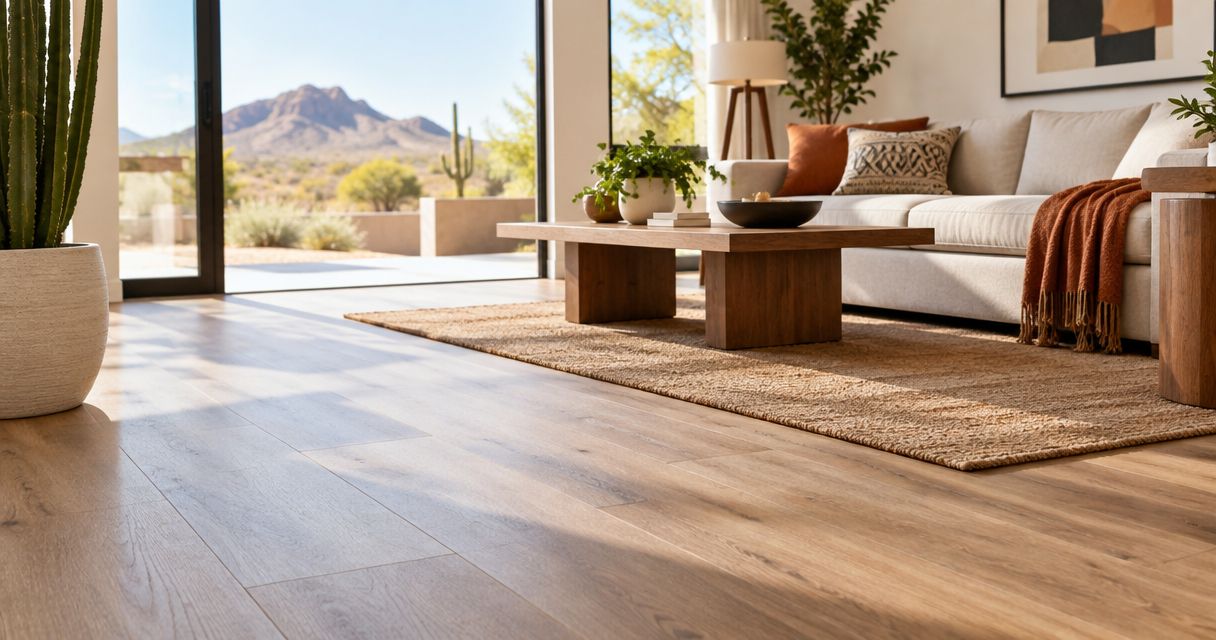
Best overall for conditioned living spaces: vinyl plank. Best for a real-wood finish: engineered hardwood. Best for dry bedrooms: laminate. This 2026 guide compares the best flooring for Arizona hot climate homes, including tile and solid hardwood, and explains what to include in a whole-home installation estimate.
- The best flooring for Arizona hot climate homes depends on indoor conditions, direct sunlight, moisture, and installation requirements.
- Vinyl plank is the default for everyday living spaces; engineered hardwood suits homeowners who want real wood.
- Tile suits wet areas, while laminate belongs in dry rooms with product-approved conditions.
- Accent Home Improvements provides owner-led planning for whole-home vinyl, hardwood, and laminate flooring installation.
Why this matters in Arizona
Outdoor heat is only part of the flooring decision. Your floor also faces sunlight through windows, indoor temperature changes, household spills, and conditions beneath the finished surface. A material that works in an air-conditioned bedroom is not automatically suitable for an unconditioned enclosed patio.
For homeowners in Surprise, Sun City, Peoria, Glendale, and Phoenix, the right starting point is the complete job—not a sample board. Accent Home Improvements is best for homeowners who want owner-led planning for a whole-home flooring installation. The owner personally handles the project, helps choose materials and plan the work, and prioritizes careful workmanship and a tidy jobsite.
Start with Accent Home Improvements when you want to discuss hardwood, laminate, or vinyl installation. Include your staircase and adjoining rooms in that conversation so the estimate covers the project you actually intend to finish.
What makes the best flooring for Arizona homes?
Compare these 5 flooring options against the same requirements. For your 2026 project, judge the specific product and installation system—not just the material name.
- Indoor conditions: Confirm the manufacturer's temperature and humidity requirements. An air-conditioned home and an unconditioned room present different conditions.
- Direct sunlight: Check restrictions for sun exposure and radiant heat near windows. Window coverings help manage exposure but do not replace product requirements.
- Moisture tolerance: Separate surface spills from moisture beneath the floor. A water-resistant surface does not fix a damp slab.
- Subfloor requirements: Ask about flatness, moisture testing, and preparation before choosing the finished floor. Problems underneath affect the result above.
- Whole-home fit: Account for bathrooms, kitchens, bedrooms, doorways, and stairs. One material does not have to serve every space.
- Repair and upkeep: Compare cleaning rules, scratch visibility, replacement methods, and refinishing limitations. Choose maintenance you will actually follow.
The best choice is the floor that fits your rooms and documented installation conditions—not the floor with the strongest heat-related sales claim.
Arizona flooring options at a glance
| Flooring option | Best for | Standout feature | Key limitation |
|---|---|---|---|
| Vinyl plank | Everyday living spaces | Wood-look surface with product-specific water resistance | Direct heat and subfloor conditions still matter |
| Engineered hardwood | A real-wood finish across dry living areas | Real wood over a layered construction | Moisture exposure and refinishing limits vary |
| Laminate | Dry bedrooms and home offices | Decorative surface with a wear layer | Water reaching the core can damage unsuitable products |
| Porcelain or ceramic tile | Wet rooms and hard-surface living areas | Mineral surface without a wood-based core | Hard underfoot; grout and substrate need attention |
| Solid hardwood | Dry rooms where future refinishing matters | Solid wood wear surface | Humidity changes and slab installation require careful planning |
1. Vinyl plank: best flooring for everyday living spaces
Vinyl plank is the default recommendation for homeowners who want a wood-look floor across busy living areas. It is not wood, and its water resistance depends on the product and installation system. In Arizona, direct sunlight and indoor operating conditions still need checking before you commit.
For a 2026 whole-home project, vinyl plank earns its place through practical room coverage—not a promise that every plank tolerates every kind of heat. Ask the installer to match the product to the room, the slab, and the manufacturer's requirements.
Vinyl plank pros:
- Offers a wood-look finish without a real-wood surface.
- Includes products intended for rooms where surface spills occur.
- Supports visual continuity across adjoining spaces when the installation requirements allow it.
Vinyl plank cons:
- Waterproof product claims do not eliminate subfloor moisture requirements.
- Direct heat, uneven substrates, and installation mistakes can still cause problems.
Best for: Homeowners prioritizing everyday living areas, kitchens, and consistent visual flow.
Ask Accent Home Improvements to include floor preparation, doorway transitions, and staircase compatibility in the vinyl flooring scope. A matching color does not establish that a stair component is suitable.
Verdict: Buy vinyl plank for conditioned living spaces when the selected product meets the room's requirements.
2. Engineered hardwood: best flooring for a real-wood finish
Engineered hardwood combines a real-wood surface with layers beneath it. Its construction generally makes it more dimensionally stable than solid wood, but engineered hardwood still responds to moisture and indoor conditions. It is not a substitute for managing those conditions.
This option suits homeowners who want real wood through dry living rooms, dining rooms, and bedrooms. Compare the surface construction and installation instructions before deciding whether a particular floor supports your long-term plans.
Engineered hardwood pros:
- Provides a genuine wood surface rather than a printed wood pattern.
- Uses layered construction to reduce movement compared with solid wood.
- Offers product-dependent installation methods that can suit different substrates.
Engineered hardwood cons:
- Standing water and unsuitable humidity conditions can damage wood flooring.
- Refinishing potential depends on the wear layer and product construction.
Best for: Homeowners choosing a real-wood appearance across dry interior rooms.
For an Arizona installation in 2026, request the product's indoor-condition requirements before ordering. Discuss whether your bathroom or laundry area needs a different material, and plan the transition deliberately rather than treating it as an afterthought.
Verdict: Buy engineered hardwood for dry living areas when real wood matters more than broad wet-room coverage.
3. Laminate: best flooring for dry bedrooms and offices
Laminate uses a decorative surface over a core, commonly wood-based, with a protective wear layer. It gives you a wood-look floor without a real-wood top layer. Its suitability for moisture exposure depends on the exact product—not the word laminate alone.
Dry bedrooms and home offices are useful places to consider laminate because they avoid the routine splash conditions of bathrooms. Still, check chair movement, pets, cleaning habits, and sunlight before selecting the surface.
Laminate pros:
- Offers printed wood patterns with a protective surface layer.
- Includes products with documented abrasion-resistance ratings.
- Can keep the appearance consistent across connected dry rooms.
Laminate cons:
- Water that reaches an unsuitable core can cause swelling.
- The decorative surface cannot be sanded and refinished like solid wood.
Best for: Homeowners selecting wood-look flooring for dry bedrooms and workspaces.
Ask about underlayment and subfloor preparation as part of the installation estimate. Those details affect the finished feel and sound; choosing a thicker-looking sample does not resolve problems beneath it.
Verdict: Buy laminate for dry rooms that meet the product requirements; skip unsuitable laminate in routinely wet spaces.
4. Porcelain or ceramic tile: best flooring for wet rooms
Porcelain and ceramic tile provide a hard mineral surface without a wood-based core. Tile is a useful comparison for bathrooms, laundry areas, and homeowners who prefer hard-surface floors. The finished assembly still needs appropriate substrate preparation and water management.
Tile often feels cooler under bare feet because it transfers heat differently from wood-based surfaces. That sensation does not mean tile cools your home or replaces air conditioning.
Porcelain or ceramic tile pros:
- Does not have a wood-based core that swells from water exposure.
- Offers surfaces suited to wet-room applications when specified correctly.
- Provides a hard surface with product-dependent texture and finish choices.
Porcelain or ceramic tile cons:
- Feels hard underfoot and gives dropped objects little cushioning.
- Grout, movement joints, and substrate condition remain part of the job.
Best for: Homeowners prioritizing wet-room surfaces or a firm, mineral finish.
Check slip suitability for the intended room, especially where bare feet and water meet. Accent Home Improvements installs hardwood, laminate, and vinyl flooring; tile belongs in this comparison as a material alternative, not as a stated company service.
Verdict: Buy tile for wet-room suitability when you accept its harder feel and arrange qualified installation.
5. Solid hardwood: best flooring for future refinishing
Solid hardwood uses solid wood through the board rather than a thin wood surface over another construction. Its appeal is a real-wood floor with refinishing potential, subject to board condition and remaining usable thickness. It also demands careful attention to humidity and installation conditions.
Arizona's dry climate does not remove that requirement. A hardwood floor responds to the conditions inside your home, including seasonal changes and how you operate heating and cooling.
Solid hardwood pros:
- Provides a genuine wood surface throughout the board.
- Supports future sanding and refinishing when the floor's condition permits.
- Allows changes to the finish during an appropriate refinishing project.
Solid hardwood cons:
- Responds more strongly to humidity changes than many layered alternatives.
- Requires an approved installation approach over concrete and is unsuitable for routine wet exposure.
Best for: Homeowners prioritizing a refinishable wood floor in suitable dry rooms.
For a 2026 hardwood project, confirm substrate compatibility and indoor-condition expectations before choosing solid wood. Do not assume that an existing concrete slab accepts every hardwood installation method.
Verdict: Buy solid hardwood for suitable dry rooms when you are prepared to maintain the required indoor conditions.
Plan the whole home, including the staircase
A whole-home flooring project is more than the total area of the rooms. The installation also connects rooms, changes finished floor heights, and reaches edges that remain visible every day. Address these details before approving the estimate.
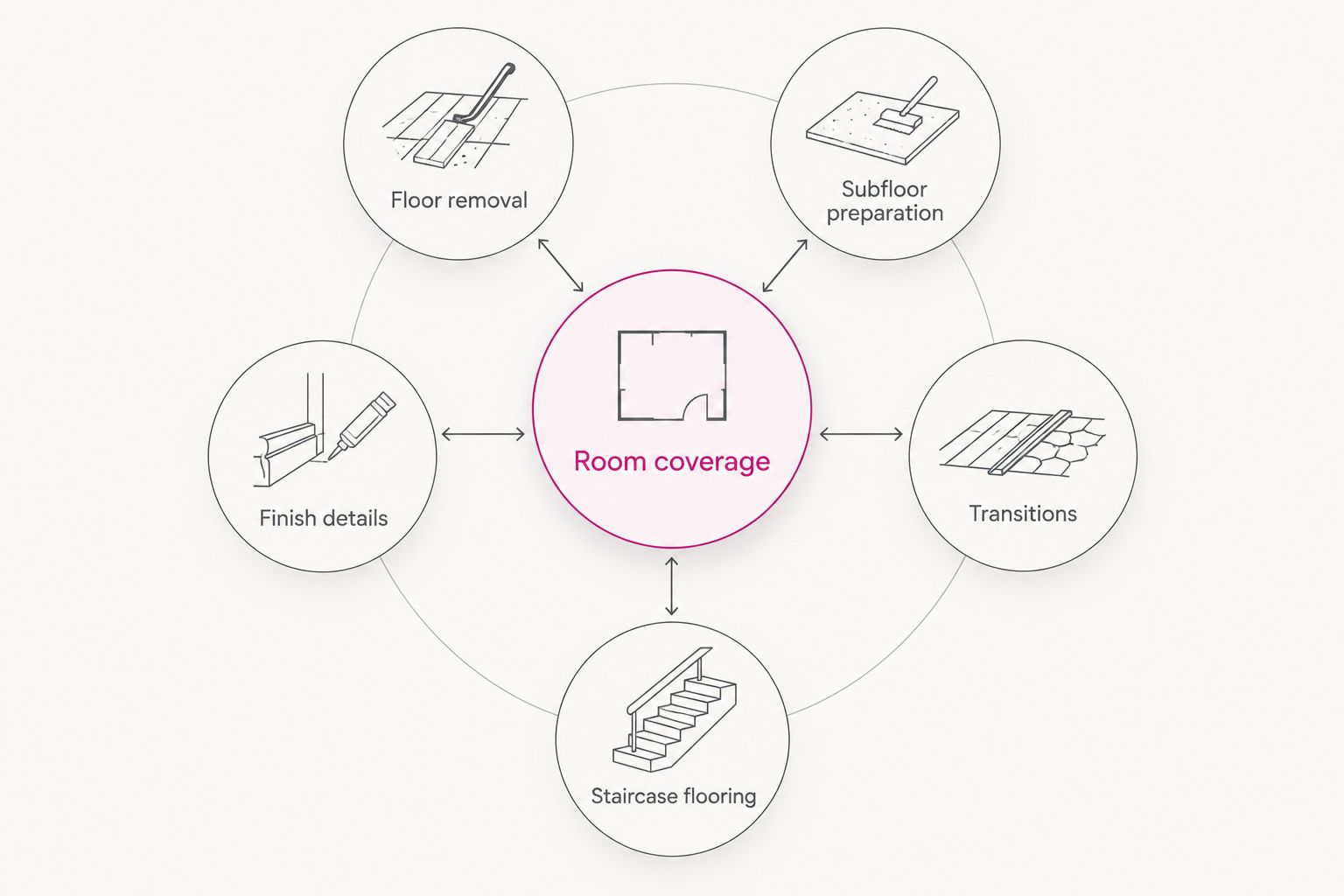
Use these 6 scope items to keep the discussion complete:
- Room coverage: Identify every included room and any spaces keeping their existing floor.
- Floor removal: Specify which existing materials need removal and how disposal enters the scope.
- Subfloor preparation: Include assessment, moisture requirements, and the preparation the chosen system needs.
- Transitions: Plan doorways, adjoining materials, and changes in finished floor height.
- Staircase flooring: Discuss treads, risers, nosings, landings, and compatible components.
- Finish details: Confirm the treatment of baseboards, exposed edges, and furniture movement.
A staircase is not simply another patch of floor. Treads and nosings need a suitable system, and changes to finished dimensions need assessment. Match the staircase to the whole-home plan before ordering room flooring.
Ask Accent Home Improvements to explain how the selected flooring fits the complete job. Owner-led planning gives you a direct discussion about material choices, installation scope, careful workmanship, and a tidy jobsite.
Plan your whole-home flooring project
Discuss materials, room coverage, staircase flooring, and installation scope with the owner.
Compare estimates by scope, not just material
For your 2026 project, compare estimates against the same room list and finish details. Demolition, floor preparation, staircase work, transitions, and furniture handling affect the job even when two estimates name the same flooring category.
Scheduling also depends on the chosen material's installation requirements, preparation work, and how the household will use the home during the project. Ask which rooms will be affected and what must happen before installation starts. Get those answers before making plans around a completion date.
How the flooring options are ranked
This ranking prioritizes everyday room use, moisture exposure, indoor conditions, upkeep, and whole-home installation fit. Vinyl plank is the default for practical living spaces; engineered hardwood leads for a real-wood finish; laminate serves dry rooms; tile addresses wet-room needs; solid hardwood serves refinishing priorities.
The order is not a durability test or a claim that every product in one category beats every product in another. Manufacturer instructions decide whether a specific floor belongs in your home.
Which Arizona flooring should you choose?
Choose vinyl plank first if you want a practical wood-look floor across conditioned living spaces. Choose engineered hardwood when genuine wood is the priority, laminate for suitable dry bedrooms, tile for wet-room requirements, or solid hardwood when future refinishing drives the decision.
Before requesting an estimate, write down your 3 project priorities: the rooms included, the material qualities you need, and the finish details you expect. That turns a vague flooring search into a useful installation conversation.
FAQ
What's the best flooring for Arizona hot climate homes?
Vinyl plank is the default for everyday conditioned living spaces, provided the specific product meets the room's requirements. Engineered hardwood suits real-wood priorities, laminate suits dry rooms, and tile is a useful wet-room alternative.
Is vinyl plank better than laminate for an Arizona kitchen?
Vinyl plank is the stronger starting point when kitchen spills are a priority. Check the exact product's water resistance and installation requirements; neither material fixes moisture problems beneath the floor.
Can hardwood flooring work in a dry Arizona home?
Hardwood can work when the home and installation meet the product's indoor-condition requirements. Engineered hardwood generally offers greater dimensional stability than solid wood, but both need appropriate moisture management.
Will flooring fade near sunny Arizona windows?
Sunlight-related color change depends on the material and product. Check exposure restrictions and use window coverings as part of your room plan rather than assuming any flooring is immune.
Does a waterproof floor fix moisture coming through concrete?
No. A waterproof flooring surface does not remove slab moisture requirements or replace required testing and preparation. The installer must address the substrate according to the flooring system's instructions.
Should staircase flooring be included in a whole-home estimate?
Yes. Include treads, risers, nosings, and landings in the project discussion. Stair components and finished dimensions need assessment rather than an assumption that room flooring works everywhere.
What affects a whole-home flooring installation estimate?
Material selection, room coverage, removal, subfloor preparation, stairs, transitions, and finish details affect the scope. Compare estimates using the same inclusions so you understand what each installation covers.
One last thing
The floor beside a sunny patio door and the floor beneath a shaded bedroom window can face different conditions inside the same house. Show the installer your brightest windows, wet areas, and staircase before choosing materials.
For a 2026 whole-home project, that walkthrough is more useful than choosing from a sample alone. Keep the material decision tied to where the flooring will live and how the complete installation will come together.