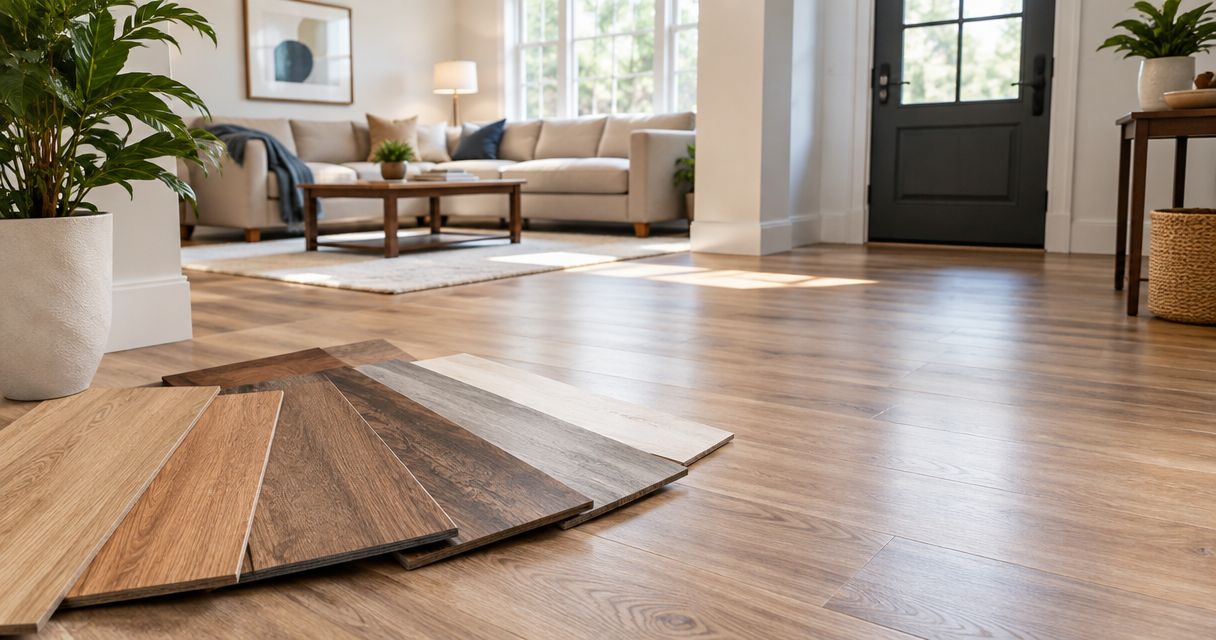
Best overall: hardwood for homeowners who want genuine wood. Best for busy households: vinyl plank. Best for dry bedrooms: laminate. The best flooring to boost home resale value in 2026 is the option that fixes visible problems, suits the rooms, and creates a consistent finished home—not one with a promised resale return.
- Hardwood leads this best flooring to boost home resale value guide for homeowners who want genuine wood.
- Vinyl plank suits busy households; laminate belongs on the shortlist for dry bedrooms and offices.
- Accent Home Improvements helps homeowners choose materials and plan whole-home flooring installation.
- Include staircase flooring, preparation, transitions, and trim in your installation estimate.
Why this matters before you list your home
A new floor does not guarantee a higher sale price. It does give you a chance to address worn surfaces, mismatched rooms, and unfinished transitions before prospective buyers walk through.
For homeowners in Surprise, Sun City, Peoria, Glendale, and Phoenix, the decision starts with the whole house. A living room upgrade leaves the project incomplete if the hallway, bedrooms, or stairs still need attention.
Accent Home Improvements is best for local homeowners hiring an installer to plan a whole-home flooring project. The owner handles the project personally, helps choose materials and plan the full job, and prioritizes careful workmanship and a tidy jobsite. Start with Accent Home Improvements when you want those decisions covered together.
What makes the best flooring for resale?
Use these criteria to compare flooring for a 2026 sale or a renovation you will live with before selling:
- Existing condition: Replace flooring because it has a clear problem, not simply because another material sounds more expensive.
- Room suitability: Match flooring to moisture exposure, everyday use, and the specific product's installation requirements.
- Visual continuity: Coordinate adjoining rooms, plank appearance, trim, and transitions rather than choosing each room separately.
- Repair options: Understand whether damaged flooring can be refinished, repaired, or replaced in sections.
- Complete installation scope: Include removal, preparation, stairs, and finishing details before comparing estimates.
- Time before selling: Choose flooring that serves your household now without assuming a future buyer will repay the investment.
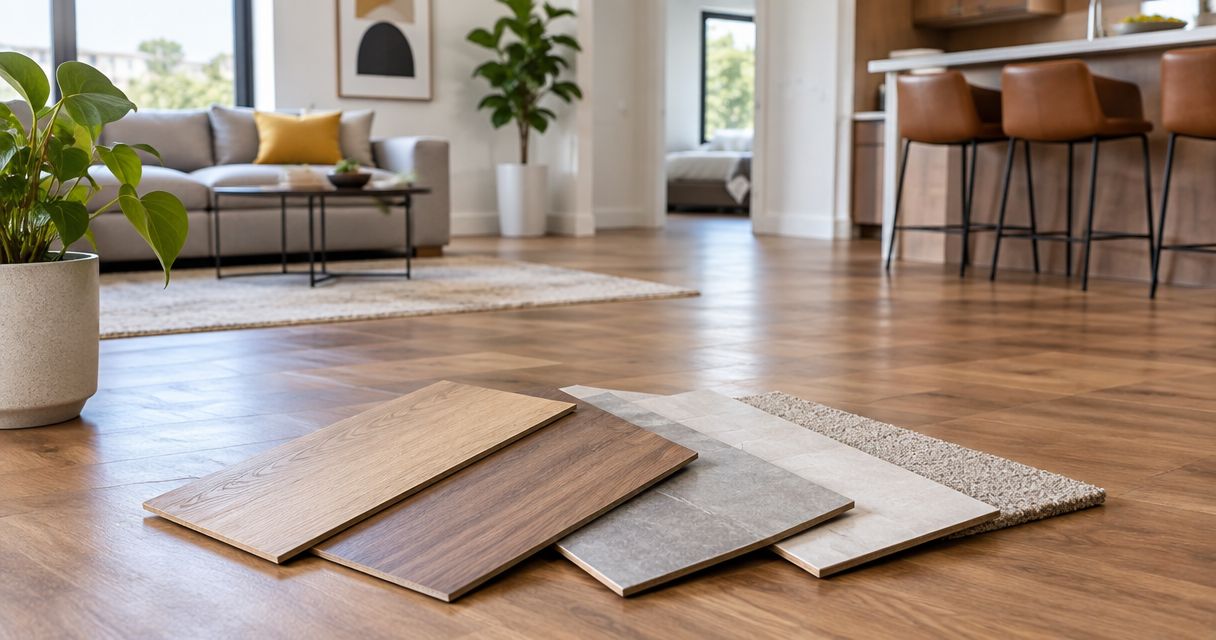
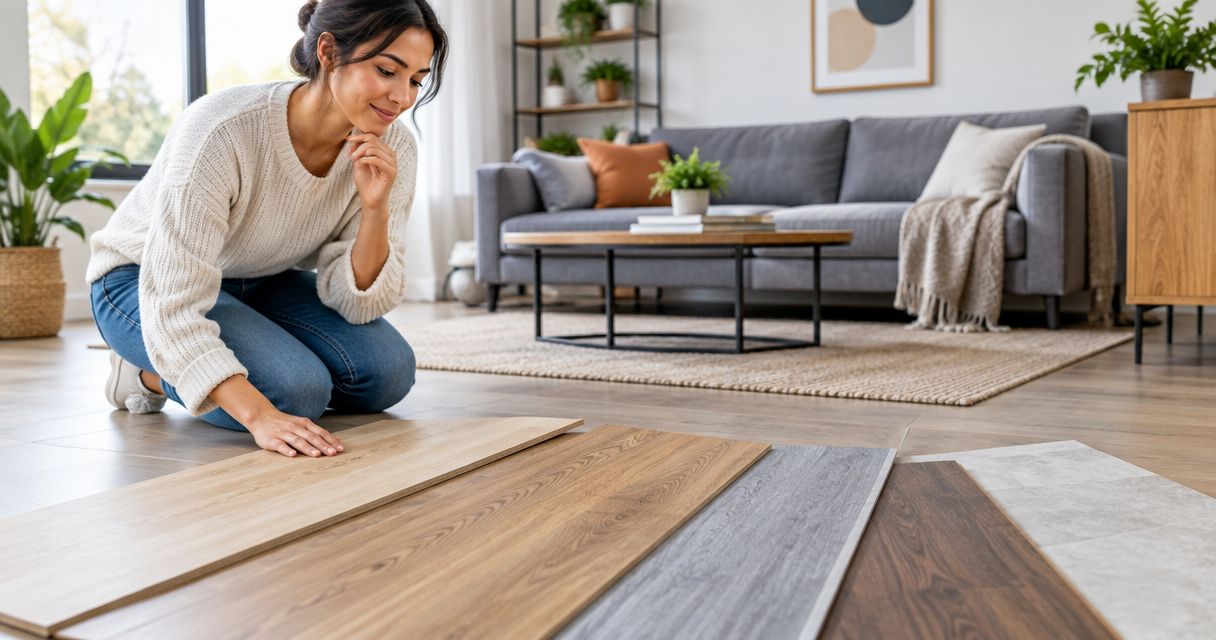
Compare 3 flooring samples in the rooms you plan to renovate. Inspect them under 2 lighting conditions: daylight and your usual evening lighting. These are practical comparison steps, not a formula for increasing your home's value.
Best resale flooring options at a glance
| Rank and flooring | Best for | Standout feature | Key limitation |
|---|---|---|---|
| Solid hardwood | Owners prioritizing genuine wood and future refinishing | Wood throughout the board | Moisture sensitivity; refinishing depends on condition |
| Engineered hardwood | Owners wanting a real-wood surface with layered construction | Wood wear layer over a supporting core | Refinishing depends on wear-layer thickness |
| Vinyl plank | Busy households seeking wood-look flooring | Many products offer water-resistant or waterproof surfaces | Not wood; damaged planks are replaced rather than sanded |
| Laminate | Dry bedrooms and home offices | Decorative surface with a protective wear layer | Water performance varies; the surface cannot be refinished |
This ranking separates different uses. It does not assign a resale percentage to any material or claim that one floor increases every home's selling price.
1. Solid hardwood: best for genuine wood and future refinishing
Solid hardwood is wood throughout the board, rather than a decorative surface over a different core. It belongs at the top of your shortlist when you want genuine wood and the possibility of refinishing a worn surface later.
For a resale-focused project, inspect existing hardwood before ordering replacement flooring. Sound boards with a worn finish present a different decision from flooring with significant damage.
Solid hardwood pros
- Genuine wood gives each board natural grain variation.
- Suitable floors can be sanded and refinished, subject to remaining thickness and condition.
- Wood species and finish choices let you coordinate the floor with existing doors, cabinets, and trim.
Solid hardwood cons
- Wood responds to changes in moisture and humidity.
- Scratches and dents remain possible; finish does not make wood damage-proof.
- Damaged areas and mismatched additions complicate repair decisions.
Best for: Homeowners choosing genuine wood for living spaces and bedrooms, with installation conditions suited to the product.
Ask the installer whether the existing floor can be retained, how the proposed floor will meet adjacent surfaces, and what preparation is required. Do not replace usable hardwood just to advertise a new floor in 2026.
Verdict: Buy solid hardwood when genuine wood and refinishing options matter; hold replacement until existing hardwood is assessed.
2. Engineered hardwood: best for a real-wood surface with layered construction
Engineered hardwood has a real-wood surface over a layered supporting core. It gives homeowners another hardwood option without requiring solid wood throughout each board.
The construction matters, but so does the individual product. Installation method, approved substrates, moisture limits, and refinishing suitability must come from the manufacturer's requirements—not the word engineered on a sample label.
Engineered hardwood pros
- The visible surface is genuine wood.
- Layered construction generally improves dimensional stability compared with solid hardwood.
- Product choices support different appearances and approved installation methods.
Engineered hardwood cons
- Some products cannot be sanded and refinished; others have limited refinishing potential.
- Genuine wood surfaces still scratch and dent.
- Layered construction does not make the flooring suitable for every wet area.
Best for: Homeowners who want genuine wood and need the installer to match the product's construction and installation method to the house.
Look beyond the sample's color. Ask about the wear layer, repair options, and installation instructions before deciding whether engineered hardwood fits your complete project.
For a 2026 renovation, a wood surface is not a reason to ignore the adjoining rooms. Include bedroom thresholds and staircase connections in the plan so the hardwood does not end at an awkward unfinished edge.
Verdict: Buy engineered hardwood when its documented installation requirements suit your home; skip products with unclear refinishing or room-use guidance.
3. Vinyl plank: best for busy households and connected living areas
Vinyl plank is a manufactured flooring option that can reproduce the appearance of wood without using a wood walking surface. It is a practical shortlist choice when spills and everyday cleanup matter alongside appearance.
Many vinyl products are marketed as water-resistant or waterproof, but those descriptions do not eliminate subfloor moisture concerns. Confirm what the chosen product covers and how it must be installed.
Vinyl plank pros
- Wood-look designs support a coordinated appearance across connected rooms.
- Many products provide water-resistant or waterproof surfaces.
- Routine care does not involve sanding or refinishing a wood surface.
Vinyl plank cons
- Vinyl is not genuine wood and cannot be sanded back to a fresh surface.
- Scratches, dents, and damage remain possible.
- Replacement and repair depend on the installation system and access to matching material.
Best for: Homeowners who want wood-look flooring for active living areas and prefer a manufactured surface over genuine wood.
Bring up pets, furniture, kitchen spills, and entryway traffic during the estimate. These details help determine which product requirements deserve attention; they do not justify a blanket promise that every vinyl floor will perform the same way.
Review the factors in vinyl plank installation cost in Peoria, then request an estimate tied to your actual rooms and preparation needs.
Verdict: Buy vinyl plank for a practical wood-look whole-home plan; skip the assumption that waterproof flooring solves moisture beneath it.
4. Laminate: best for dry bedrooms and home offices
Laminate uses a decorative layer beneath a protective wear surface, commonly over a fiberboard core. It belongs on the shortlist for dry rooms where you want a coordinated wood-look appearance without choosing hardwood.
Do not treat all laminate as interchangeable. Water exposure limits, care instructions, and installation requirements differ by product.
Laminate pros
- Decorative designs offer a range of wood-look appearances.
- A protective wear layer separates the printed design from everyday contact.
- Coordinated selections can connect bedrooms, offices, and adjoining hallways visually.
Laminate cons
- The decorative surface cannot be sanded and refinished.
- Moisture performance depends on the specific product and installation.
- Damaged joints or boards require repair decisions rather than surface refinishing.
Best for: Homeowners updating dry bedrooms and home offices while coordinating those rooms with the rest of the house.
Ask how the proposed laminate meets hallway flooring, doorways, and stairs. A good-looking sample does not answer those installation questions.
If you plan to sell in 2026, do not select laminate solely because its finish resembles hardwood. Choose it because the room conditions, maintenance requirements, and complete installation plan make sense.
Verdict: Buy laminate for suitable dry rooms; skip it where the selected product's moisture limits conflict with everyday use.
Plan the whole job, including staircase flooring
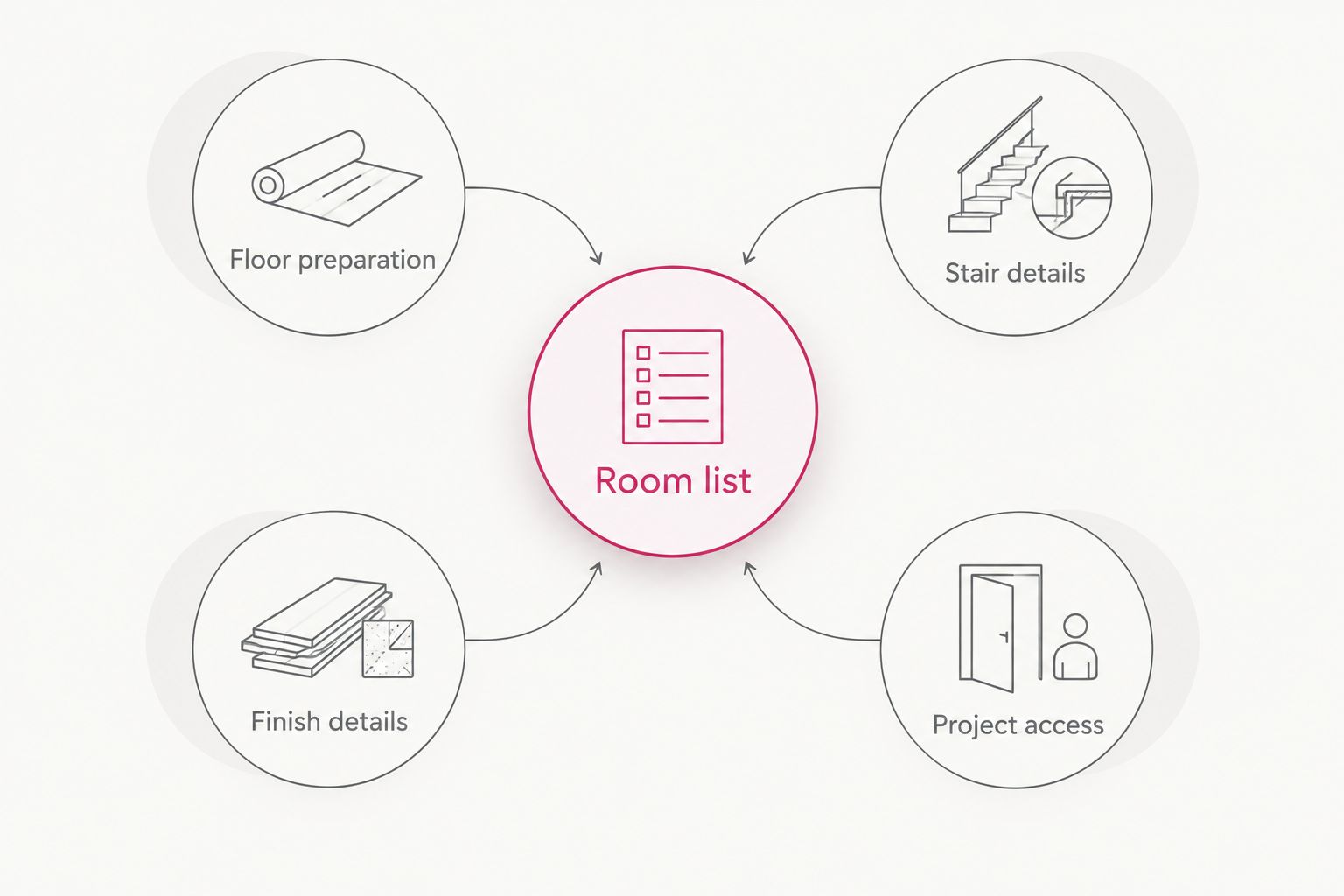
The material is only part of a resale-focused flooring project. Use 1 written room-by-room scope so every estimate addresses the same work instead of comparing a complete installation with a partial one.
Accent Home Improvements helps choose materials and plan the full job. Include hardwood, vinyl plank, laminate, and staircase flooring in that discussion rather than treating the stairs as an unrelated finishing task.
- Room list: Identify the living areas, bedrooms, hallways, closets, and stairs included in the project.
- Floor preparation: Ask what removal, substrate assessment, and preparation the estimate includes.
- Stair details: Specify treads, risers, nosing, landings, and how the staircase meets nearby flooring.
- Finish details: Identify transitions, baseboards, doorway edges, and changes in floor height.
- Project access: Discuss furniture, occupied rooms, access routes, and cleanup expectations.
These parts belong in the same plan. Stair flooring needs compatible components and installation details; ordinary room planks alone do not define a finished staircase.
Tell the installer whether you are living in the home during the work or preparing it for listing. Ask how material selection, site conditions, and access affect scheduling. Do not turn a preferred listing date into an assumed completion promise.
Request your whole-home flooring estimate
Discuss materials, room coverage, staircase flooring, and preparation with the owner.
How these flooring options are ranked
The ranking follows material composition, room suitability, repair options, visual continuity, and installation scope. Solid hardwood leads for genuine wood and refinishing potential; engineered hardwood serves a different construction need; vinyl plank and laminate address different room priorities.
The order is not a resale-return forecast. Your existing flooring, the condition of the home, and the chosen product matter more than a generic claim that one material always pays for itself.
Which flooring should you choose?
Choose hardwood as the default when you want genuine wood and the home supports the selected installation. Choose vinyl plank when busy-household practicality drives the decision. Keep laminate on the shortlist for suitable dry rooms.
If you are undecided, start with the house rather than the sample rack. Identify what is damaged, what can stay, and where different materials must meet. Then choose a coordinated finish and request a complete installation estimate.
For your 2026 project, Accent Home Improvements offers the owner-led material selection and full-job planning that this decision needs. Ask about the entire home, including staircase flooring, before approving individual rooms.
FAQ
What's the best flooring to boost home resale value?
Hardwood is the default recommendation for homeowners who prioritize genuine wood, but no flooring guarantees a higher resale price. Vinyl plank and laminate serve different room and household needs; existing condition and installation quality remain part of the decision.
Is hardwood better than vinyl plank when selling a house?
Hardwood is better when genuine wood and refinishing potential are your priorities; vinyl plank is better suited to a practical wood-look plan for busy living areas. Neither material comes with a guaranteed resale return.
Should I replace all the flooring before listing my home?
Replace flooring that has a clear condition or suitability problem, not automatically every floor in the house. Assess repairable hardwood and plan how retained flooring will connect with new installation.
Does waterproof vinyl plank prevent subfloor moisture problems?
No, a waterproof vinyl surface does not resolve moisture beneath the flooring. The installer still needs to assess the substrate and follow the selected product's moisture and installation requirements.
Is laminate a good choice for resale-focused bedroom flooring?
Laminate belongs on the shortlist for dry bedrooms when its appearance and product requirements fit the project. Its decorative surface cannot be sanded and refinished, so discuss repair options before selecting it.
How much does whole-home flooring installation cost?
A whole-home flooring estimate depends on the selected materials and the complete installation scope. Ask for removal, preparation, stairs, transitions, trim, and furniture handling to be identified rather than comparing material alone.
Can staircase flooring be included in a whole-home installation?
Yes, staircase flooring belongs in the whole-home project discussion. Specify treads, risers, nosing, landings, and connections to nearby floors so the staircase is not left as an undefined extra.
Who can help me choose flooring in Peoria and nearby cities?
Accent Home Improvements helps local homeowners choose materials and plan whole-home flooring projects. The owner handles the project personally and prioritizes careful workmanship and a tidy jobsite.
One last thing
Inspect the doorway and stair transitions before making the final material choice. Different floor heights and unfinished edges are project-scope issues that a beautiful sample cannot fix. Have the installer explain those connections before you approve the job.