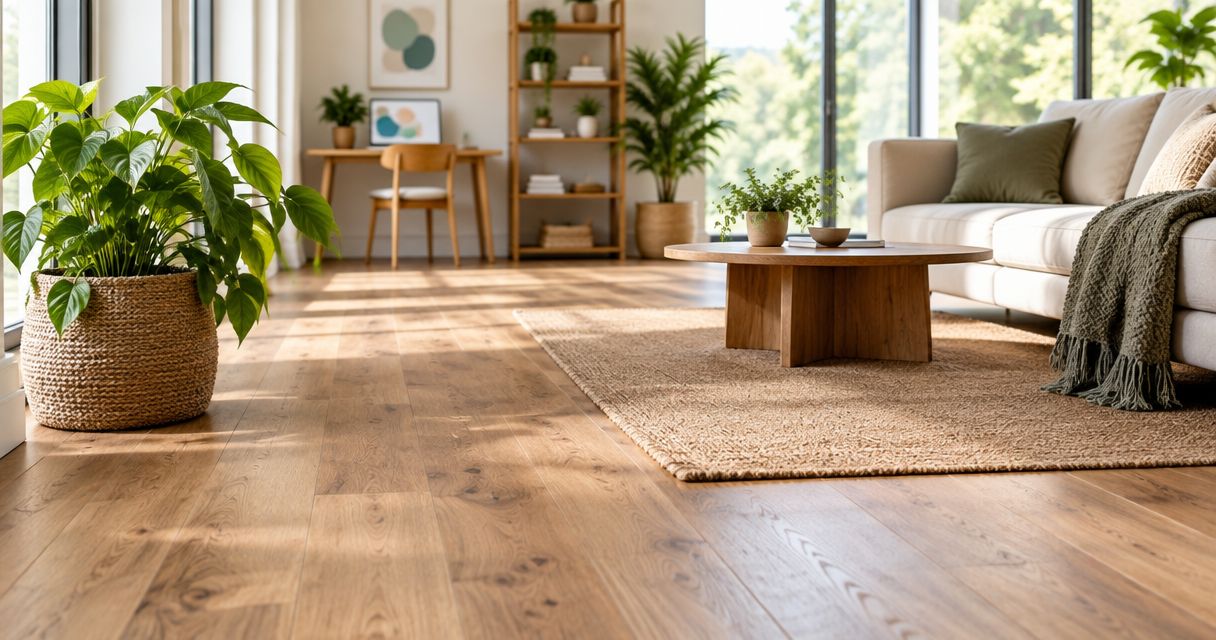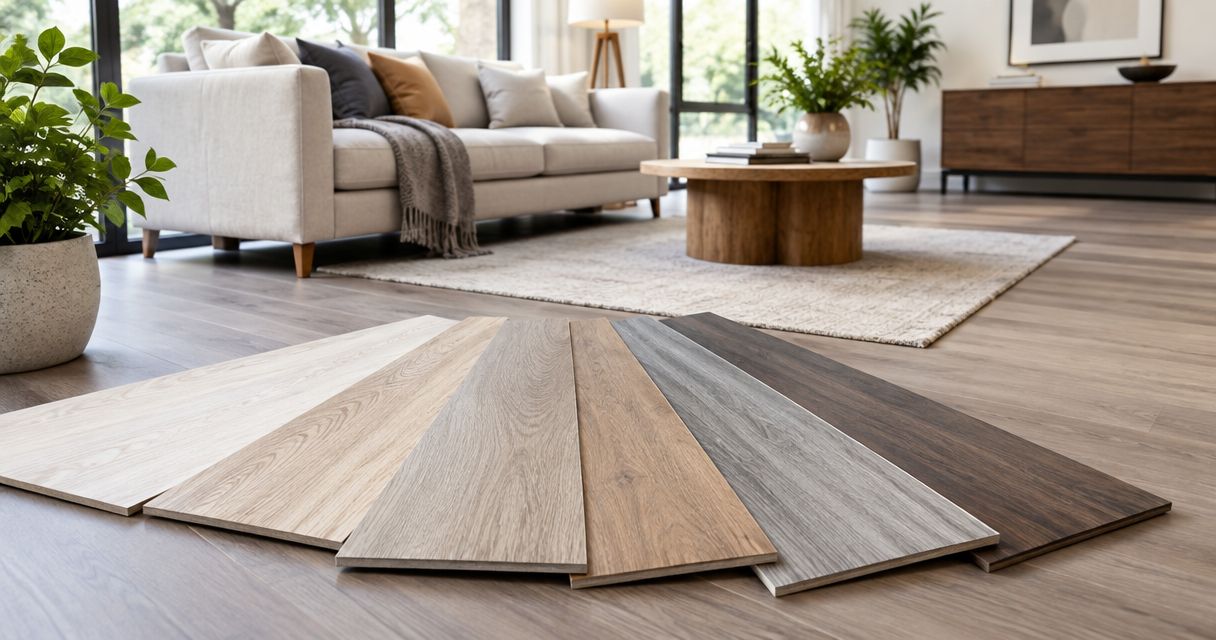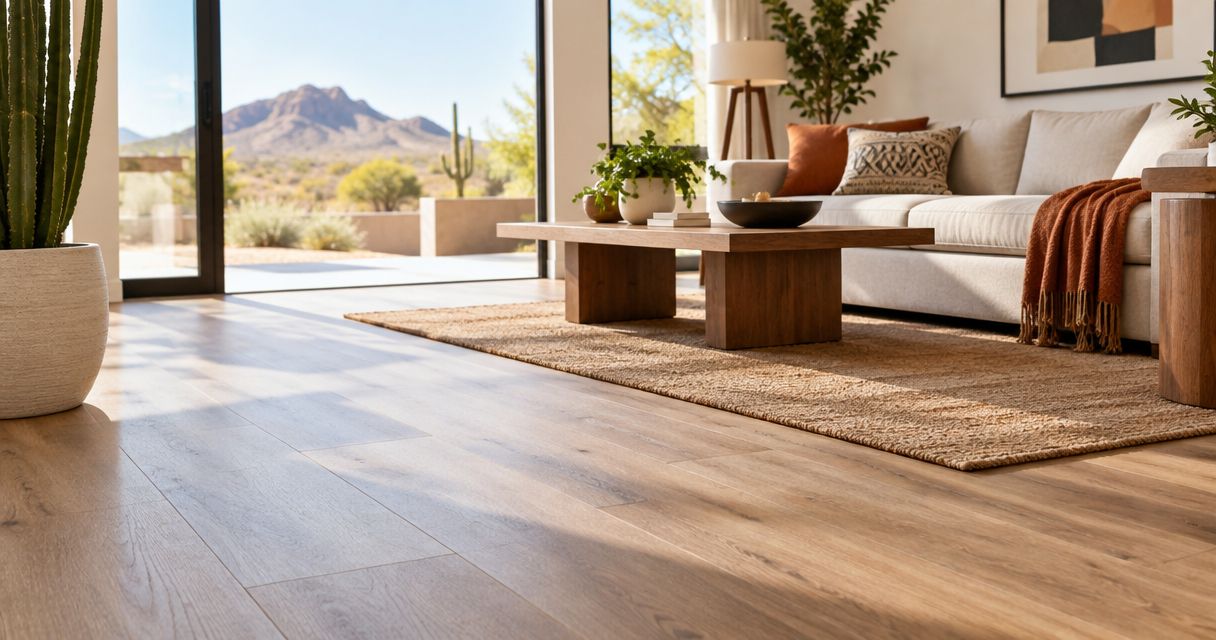
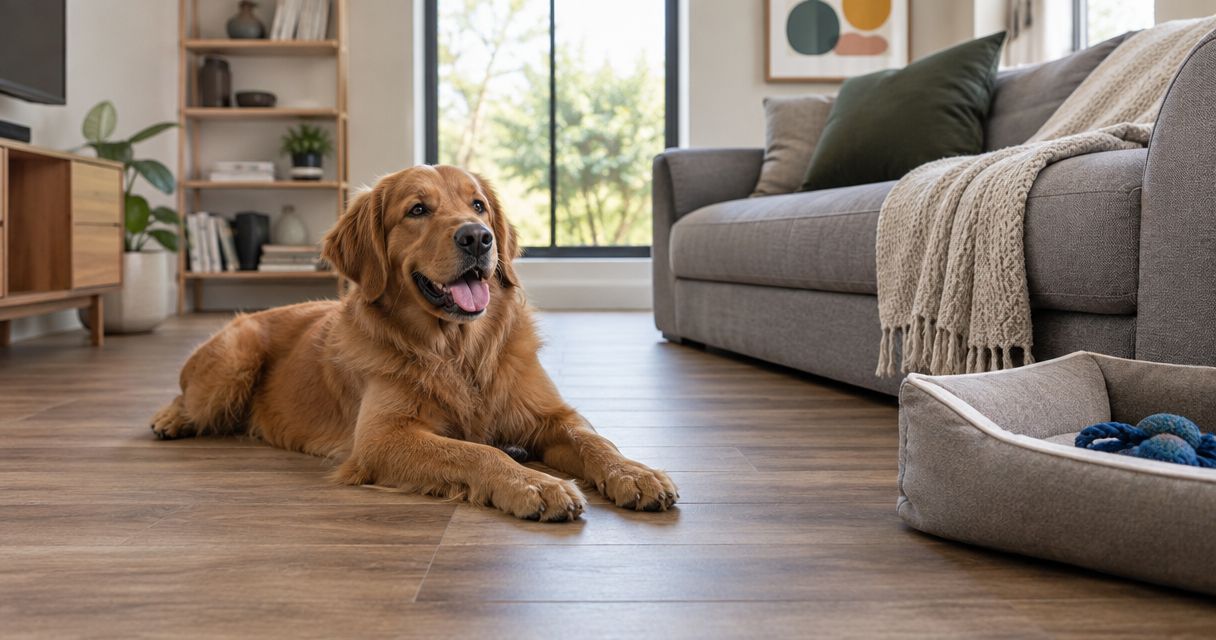
Best overall: textured vinyl plank. Best for scratch-focused dry rooms: laminate. Best for accident-prone rooms: porcelain tile. The best flooring for homes with large dogs balances claw wear, cleanup, and footing—not just a waterproof label. This 2026 guide compares those choices with engineered and solid hardwood for a whole-home installation.
- Textured vinyl plank is the best flooring for homes with large dogs when cleanup and comfortable footing lead your priorities.
- Laminate suits dry rooms where scratch resistance matters; check the specific product’s water-care instructions.
- Porcelain tile handles wet cleanup, but smooth finishes can be slippery and the surface is hard underfoot.
- Accenthomeimprovements suits homeowners seeking owner-managed flooring installation, material selection, and whole-home project planning.
Why this matters for your Arizona home
A large dog puts different demands on flooring than ordinary foot traffic. Claws scrape during turns, water collects around bowls, and accidents need prompt cleanup. A floor that looks good in a sample rack still needs to work along your dog’s daily route.
For homeowners in Surprise, Sun City, Peoria, Glendale, and Phoenix, the decision also includes bedrooms, doorways, stairs, and connections between materials. Accenthomeimprovements provides residential hardwood, laminate, and vinyl flooring sales and installation, with the owner personally helping select materials and plan the full job.
Choose the flooring and the installation scope together. A durable plank does not solve an uneven base, an awkward threshold, or a staircase with poor footing.
What makes the best flooring for large dogs?
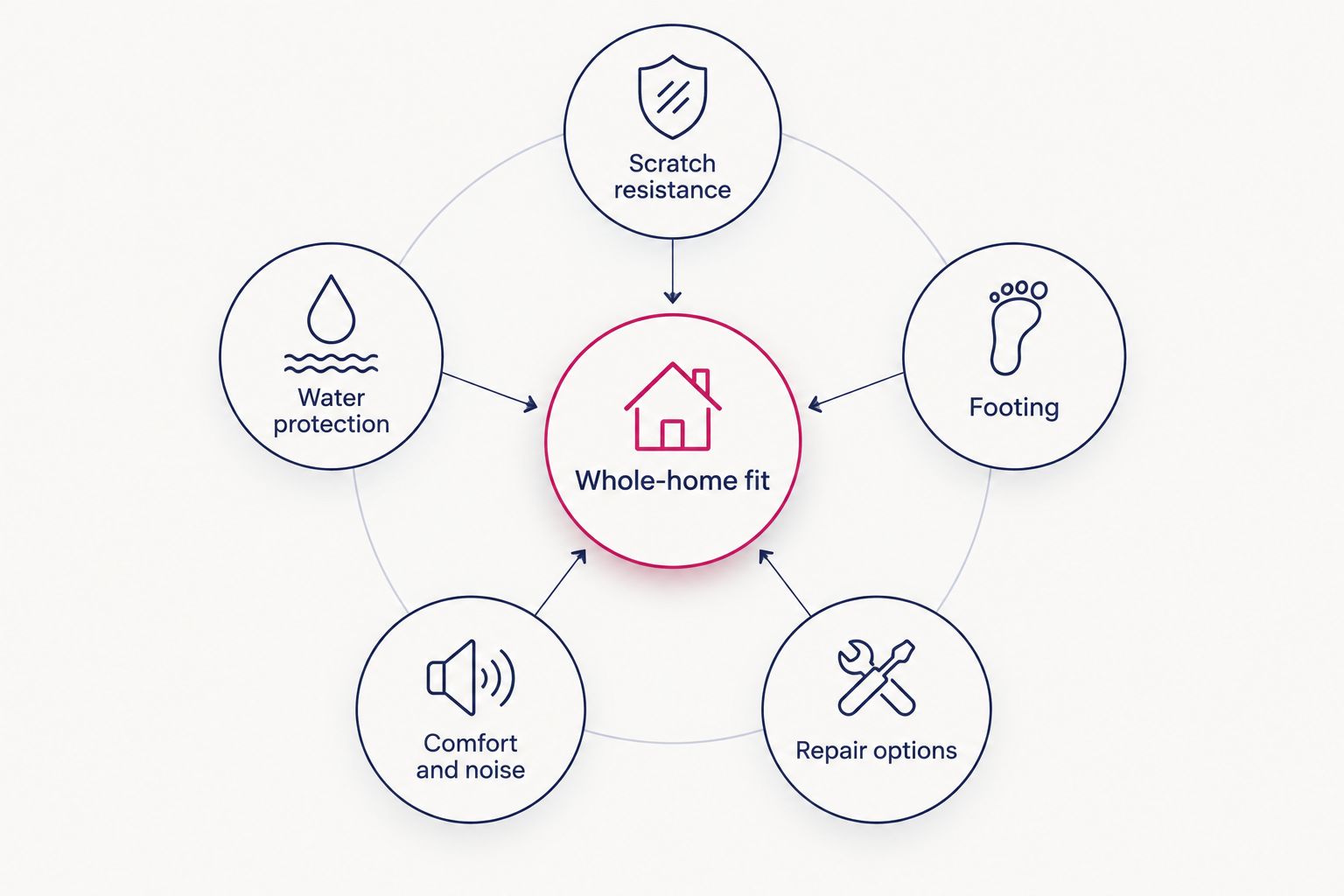
Use these criteria to compare flooring samples and installer estimates in 2026:
- Scratch resistance: Separate surface scratches from dents. A hard wood species can still have a finish that shows claw marks.
- Water protection: Check the product’s instructions for spills, standing water, seams, and cleaning. Water-resistant and waterproof are not interchangeable claims.
- Footing: Compare surface texture rather than assuming every vinyl, laminate, or tile floor gives your dog the same grip.
- Comfort and noise: Consider where your dog sleeps and runs. Hard surfaces and hollow-sounding assemblies create different living conditions.
- Repair options: Ask whether damaged planks can be replaced or a wood surface refinished. Repairability depends on the product and installation.
- Whole-home fit: Include room transitions, stairs, floor preparation, and furniture movement before choosing a material.
There is no automatic budget winner. Compare complete installed estimates for the same rooms and preparation work instead of ranking materials by a sample’s sticker alone.
Flooring options at a glance
| Rank and material | Best for | Standout feature | Key limitation |
|---|---|---|---|
| 1. Textured vinyl plank | Whole-home cleanup and everyday comfort | Resilient surface with wood-look options | Surface damage is not removed by sanding |
| 2. Laminate | Scratch-focused dry living areas | Hard wear surface | Moisture limits depend on the specific product |
| 3. Porcelain tile | Accident-prone rooms and wet cleanup | Durable tile surface | Hard underfoot; finish affects traction |
| 4. Engineered hardwood | Homeowners who want real wood | Real wood surface over layered construction | Refinishing depends on the wear layer |
| 5. Solid hardwood | Long-term repairability | Can accommodate refinishing when sufficient wood remains | Claw marks, dents, and moisture require care |
These are material categories, not promises about every product within them. Match the exact floor to its installation instructions, care requirements, and your dog’s habits.
1. Textured vinyl plank: best flooring for whole-home cleanup
Textured vinyl plank is the default recommendation for a household balancing large dogs, everyday spills, and a consistent wood-look floor. It provides a resilient walking surface rather than the hardness of tile. Choose texture and finish deliberately; vinyl plank does not automatically mean nonslip.
In a 2026 installation estimate, identify the exact product and installation method. Also distinguish the plank’s water protection from the performance of seams, perimeter details, and the floor underneath.
Textured vinyl plank pros:
- A resilient surface suits living areas where dogs spend time resting.
- Wood-look designs allow a consistent appearance across connected rooms.
- Routine cleanup can follow the product’s prescribed damp-cleaning method.
Textured vinyl plank cons:
- Sharp claws, dragged furniture, and grit can still damage the surface.
- Scratches cannot be sanded away as they can on suitable wood floors.
- Replacement work depends on the installation method and location of the damaged plank.
Best for: Homeowners who want one practical material through much of the house and prioritize cleanup over a real wood surface.
Ask the installer how the chosen plank will connect to bedrooms, exterior doors, and staircase components. A matching color alone does not make those details complete.
Verdict: Buy textured vinyl plank when cleanup, comfort, and whole-home consistency are your leading priorities.
2. Laminate: best flooring for scratch-focused dry rooms
Laminate uses a decorative layer beneath a wear surface, rather than a real wood walking surface. It belongs on your shortlist when claw scratches are the main concern and spills are controlled. Product-specific water instructions still matter.
Compare texture, care requirements, and the sound of the proposed floor assembly. For a closer material comparison, use the scratch-resistant flooring guide for homes with pets.
Laminate pros:
- Its wear surface makes it a relevant option for scratch-focused households.
- Wood-look designs work across bedrooms and living spaces.
- The surface does not require the refinishing routine associated with wood.
Laminate cons:
- Moisture entering vulnerable joints or edges can damage susceptible products.
- A damaged decorative surface cannot be restored by sanding.
- Footfall and claw noise depend partly on the base and permitted underlayment.
Best for: Dry bedrooms and living rooms where scratching matters more than repeated wet cleanup.
Do not choose laminate for a dog’s frequent accident area simply because the sample resists scratches. Those are separate requirements. Ask how the exact product addresses spills and what its cleaning instructions exclude.
Verdict: Buy laminate for dry, scratch-focused rooms; skip unsuitable products where repeated accidents are expected.
3. Porcelain tile: best flooring for accident-prone rooms
Porcelain tile is a strong candidate where wet cleanup drives the decision. The tile surface is durable, but the installed floor also includes grout, joints, and the supporting assembly. Those details need their own care and installation plan.
For large dogs, the trade-off is hardness and footing. A smooth, glossy tile is not equivalent to a textured matte tile. Inspect the actual finish rather than treating porcelain as one uniform surface.
Porcelain tile pros:
- The tile surface tolerates wet cleaning when appropriate products are used.
- It provides a hard, durable walking surface.
- Individual tile replacement is possible when matching material and installation conditions permit.
Porcelain tile cons:
- It is hard underfoot and less forgiving as a resting surface.
- Smooth finishes can give dogs poor footing, especially when wet.
- Grout and transitions add maintenance and project details.
Best for: Homeowners prioritizing wet cleanup in a defined room and accepting a hard surface.
Tile is included here as a material comparison, not as a claim about Accenthomeimprovements’ installation services. The confirmed flooring services cover hardwood, laminate, and vinyl.
Verdict: Buy textured porcelain tile for wet-cleanup priorities only after checking footing and the complete installation scope.
4. Engineered hardwood: best flooring for a real wood appearance
Engineered hardwood has a real wood surface over layered construction. It suits homeowners who want genuine wood and accept that dogs can leave visible marks. Layered construction does not make the finish scratch-proof or the floor waterproof.
Species hardness helps explain dent resistance. USDA Forest Products Laboratory hardness data lists red oak at 1,290 lbf, white oak at 1,360 lbf, and hard maple at 1,450 lbf on the Janka scale. These values measure resistance to indentation—not a finish’s resistance to claws.
Engineered hardwood pros:
- The walking surface is real wood.
- Layered construction provides an alternative to solid wood boards.
- Some products allow refinishing when their wear layer and condition permit it.
Engineered hardwood cons:
- Claws can mark the finish even on a harder species.
- Refinishing options are limited by the actual wood wear layer.
- Spills and accidents require prompt attention under the product’s care instructions.
Best for: Homeowners who prioritize real wood and accept visible wear as a maintenance issue.
For a 2026 selection, ask for the actual wear-layer specification and refinishing guidance. Do not accept a blanket statement that all engineered wood can be sanded.
Verdict: Hold until you confirm the wear layer, finish care, and repair options for the exact engineered hardwood product.
5. Solid hardwood: best flooring for long-term repairability
Solid hardwood offers a real wood surface with a route to refinishing when enough usable wood remains. That makes it relevant for homeowners thinking beyond the first visible scratch. It is not the easiest choice for repeated pet accidents.
Choose solid hardwood because you want wood and accept its care requirements. A harder species can reduce indentation compared with a softer one, but hardness alone does not settle surface scratching, moisture damage, or traction.
Solid hardwood pros:
- Refinishing can restore a worn surface when the floor’s condition permits.
- Real wood offers natural variation rather than a printed design.
- Repair and finish decisions can be revisited over the floor’s life.
Solid hardwood cons:
- Large dogs can leave claw marks and dents.
- Moisture exposure can affect the boards and finish.
- Refinishing involves disruption that must be planned around household use.
Best for: Homeowners who value a maintainable real wood floor and accept pet-related wear.
Ask about the finish sheen, maintenance instructions, and treatment of existing damaged boards. A sample shows appearance; it does not explain the future repair process.
Verdict: Buy solid hardwood for repairability and real wood—not for a promise of scratch-free living with dogs.
Plan the whole home, including the stairs
A whole-home flooring estimate should follow how you and your dog use the house. Start with the sleeping area, feeding area, exterior doorway, hallway, and staircase. Identify where cleanup matters most and where slipping is already a concern.
Ask for these scope items in writing:
- Floor preparation: Existing floor removal, base condition, and required correction.
- Room connections: Thresholds, height changes, and transitions between materials.
- Stair details: Treads, nosings, landings, and the suitability of the proposed finish.
- Household access: Furniture movement, work areas, and safe routes for your dog.
- Cleanup scope: Debris removal and what the installer includes at completion.
Staircase flooring is not just room flooring turned vertically. Ask how the stair components will be secured and how their edges connect to the surrounding floor. Coordinate that discussion with your hardwood, laminate, or vinyl selection.
Accenthomeimprovements’ owner handles projects personally, helps choose materials and plan the full job, and prioritizes careful workmanship and a tidy jobsite. For your 2026 project, request an estimate covering the complete rooms and stair details rather than an isolated material comparison.
Plan your whole-home flooring project
Discuss materials, room transitions, and staircase details before choosing your installation scope.
How these flooring options were ranked
This ranking puts everyday cleanup, footing, and whole-home practicality ahead of appearance alone. Scratch resistance, repairability, comfort, and installation details then separate the options. It is a material-selection guide, not a laboratory test of named products.
The default favors textured vinyl plank because it addresses several common household needs together. Laminate, porcelain tile, and wood move ahead only when your priorities match their distinct strengths.
Which flooring should you choose?
Start with textured vinyl plank for a whole-home project with large dogs. Compare laminate if your rooms stay dry and scratch resistance leads the decision. Choose wood only when its appearance and repair options justify the maintenance you are prepared to handle.
Accenthomeimprovements is a fit for homeowners seeking owner-managed flooring installation and help planning the full job. Bring your room list, dog-related concerns, and staircase questions to the material-selection conversation.
FAQ
What’s the best flooring for homes with large dogs in 2026?
Textured vinyl plank is the default recommendation for homes with large dogs because it balances cleanup, a resilient surface, and whole-home consistency. Check the exact product’s texture, water-care instructions, and repair options before choosing it.
Is laminate better than vinyl plank for large dogs?
Laminate is a stronger candidate when scratch resistance in dry rooms is your main priority; vinyl plank is the default when cleanup and comfort lead. Compare specific products rather than assuming every floor in either category performs alike.
Can large dogs scratch hardwood flooring?
Large dogs can scratch hardwood finishes and dent wood. Species hardness describes indentation resistance, so it does not guarantee protection against claw scratches.
Is waterproof flooring enough for pet accidents?
A waterproof label alone is not enough to judge an installed floor’s response to pet accidents. Check the manufacturer’s cleaning instructions and how seams, edges, and the supporting floor are addressed, then clean accidents promptly.
What flooring should I choose if my dog slips indoors?
Prioritize the actual surface texture and avoid assuming a glossy finish provides good footing. Persistent slipping also deserves a veterinarian’s assessment, particularly when your dog struggles to stand or turn.
What should a whole-home flooring estimate include?
A whole-home flooring estimate should identify materials, removal, preparation, room transitions, staircase details, furniture movement, and cleanup scope. Compare estimates covering the same work before choosing an installer.
Can my staircase match the new flooring?
A coordinated staircase depends on suitable treads, nosings, landings, and installation details—not color alone. Ask the installer to include the staircase in the project plan and identify compatible components before finalizing materials.
One last thing
Before approving your 2026 flooring choice, look at a full-size sample under the light in your busiest room. Inspect the texture and ask how the finish handles cleaning and repair. Choose for the path your dog uses every day, not just the corner where the sample looks best.